Logo_100yearsAfnor_CMYK_White

Sports clubs: certification to combat harassment

Facebook
Email
Twitter
LinkedIn
Agri-food expertise

Every child has the right to experience sport and activities in a safe environment, free from bullying and abuse. As in many contexts, bullying can and does occur in sport. All sport and activity providers have an important role to play in creating a positive culture that opposes bullying.

Understanding bullying behaviour

TheAnti-Bullying Alliance defines bullying as:
"The repetitive and intentional harassment of one person or group by another person or group, where the relationship involves an imbalance of power. Bullying can be physical, verbal or psychological. It can occur face-to-face or virtually."

Bullying can affect people of any age, and can occur anywhere: at home, at school, in a sports club or activity, or when using online platforms, games or technologies (cyberbullying).

Examples of bullying include looking at someone the wrong way or teasing them constantly, saying nasty things about someone behind their back, harassing someone because of their race, sex, religion, gender or disability, hurting someone physically repeatedly or excluding someone from a group.

What club committees can do

Sports clubs must adopt a zero-tolerance approach to bullying. Committees have a responsibility to take action to prevent bullying in sport and deal with it if it does occur.

Club committees can follow a few key steps to create safe and fair clubs. These are essential foundations for preventing harassment and other problems:

  • Have a good understanding of what moral harassment is.
  • Know your sport's existing policies in this area and promote them frequently to members, e.g. member protection policy and/or codes of conduct.
  • Ask committee members, volunteers and club members to take training on discrimination and harassment.
  • Lead by example - create a bullying-free culture by dealing with problems promptly and continually educating members on appropriate behavior.
  • Demonstrate your positive approach by obtaining certification - Anti-Bullying Management System according to UNI/PDR 42:2018.

What is UNI/PDR 42:2018 certification?

UNI/PdR 42:2018 compliant certification is the result of a standard published in August 2018 and drafted in collaboration between UNI, ACCREDIA and the main Italian associations that refer to the school system. The aim of this certification is to provide a tool that guarantees stakeholders, first and foremost families, that the school or organization has taken concrete measures capable of minimizing the risks to which minors are exposed in terms of bullying and cyberbullying.

This reference practice aims to implement appropriate measures to ensure respect for the best interests of the child, as clearly stated at international level by the 1989 United Nations Convention on the Rights of the Child. This objective can only be achieved if the main educational players - the family, the school and any other organization dealing with minors - carry out their educational mission in a way that takes into account the socio-existential reality of those for whom their activities are intended.

Read more

latest news
from the international network

Agri-food expertise
Taiwan

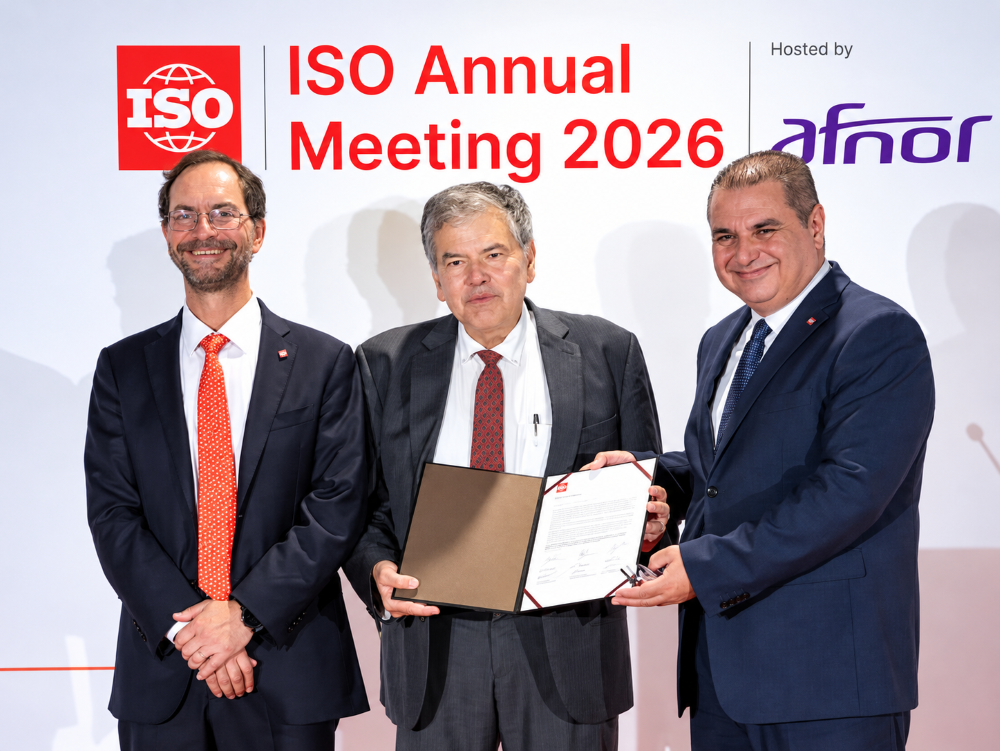
Building Global Trust Through a Century of Experience—AFNOR Successfully Hosts the 2026 Annual General Meeting of the International Organization for Standardization (ISO)

From September 28 to October 2, the 2026 International Organization for Standardization (ISO) Annual General Meeting, hosted by the French Standards Association (AFNOR), was successfully held in Paris, France. As AFNOR celebrated its 100th anniversary, representatives from standardization bodies, policymakers, industry experts, and industry representatives from more than 170 countries and regions around the world gathered in Paris to discuss the key role of international standards in addressing common global challenges. The theme of this year’s conference was “Building Trust in a Changing World.” The agenda centered on three key areas: “People and the Planet,” “Emerging Technologies and Artificial Intelligence,”“Trade and Development.” On the first day of the conference, ISO/UNDP 53001:2026, “United Nations Sustainable Development Goals Management System—Requirements,” was released to help organizations transform the Sustainable Development Goals from commitments into actions that can be managed, implemented, and measured. The conference also hosted a special session on the new ISO 9001 Quality Management System standard, featuring discussions on how quality management can help organizations turn trust into a strategic advantage. This year’s conference heard the ISO Secretary-General’s work report and focused on reviewing major governance matters, including the implementation of “ISO Strategy 2030,” the digital transformation of standards, business policy, the election of governance officers for the 2027–2029 term, and the 2027 financial budget. The winners of the 2026 Lawrence E. Archer Leadership Award were also announced. Throughout its century-long history, AFNOR has consistently been a key participant and driving force in global standardization governance. During the meeting, following a proposal by AFNOR and approval by ISO members, ISO officially released the “Paris Declaration” on addressing climate change in the global standards sector, calling on member countries to rely on international standards to strengthen climate adaptation capacity and development resilience, and to advance the implementation of the global Sustainable Development Goals.

Read more "
Taiwan

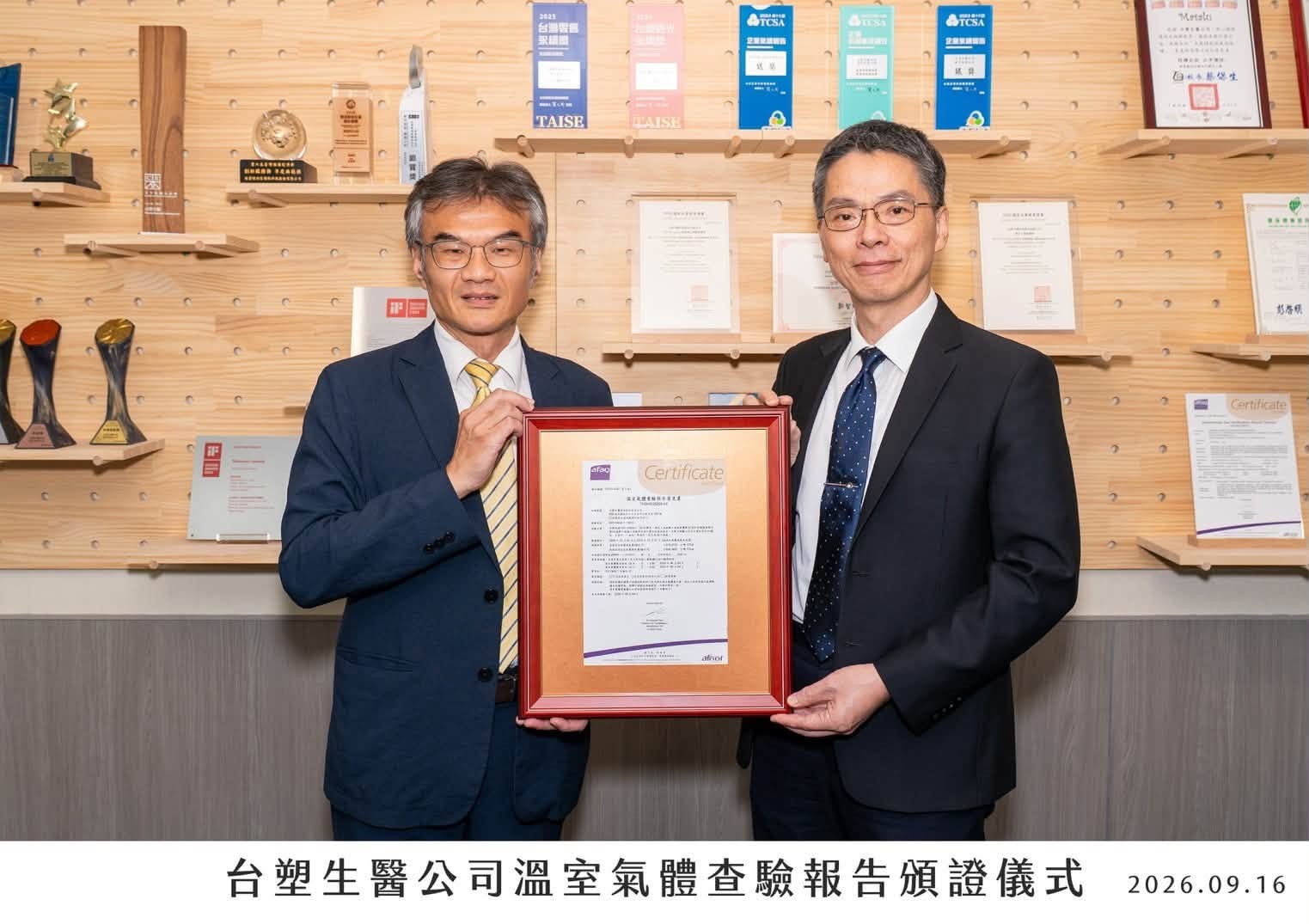
"Fobiao International Certification" Completes ISO 14064-1 Greenhouse Gas Inventory Verification for "Formosa Biotech"

“Fabao International Certification” recently announced that “Formosa Biotech” has successfully passed the ISO 14064-1:2018 greenhouse gas inventory verification, and a certification ceremony was held recently. This verification confirms that the company’s greenhouse gas emissions data and management system comply with international standards. As an internationally recognized third-party verification body, “Fabo International Certification” conducted this verification in accordance with the ISO 14064-1 standard,and conducted an independent assessment of Formosa Biotech’s organizational boundaries, identification of emission sources, and data collection and calculation processes. The verification process confirmed that the company has established a systematic foundation for carbon management, and that its inventory results are complete and reliable, serving as a basis for developing future carbon reduction strategies. To promote sustainable development, “Formosa Biotech” has not only completed its greenhouse gas inventory but has also implemented the principles of the circular economy in its product bottle recycling program, enabling resources to re-enter the circular system and reducing resource consumption and carbon emissions at the source. Through systematic management, the company has demonstrated concrete actions ranging from carbon inventory and carbon reduction initiatives to resource recycling. The professional verification team at “Fabao International Certification” noted that a company’s successful verification of its greenhouse gas inventory indicates it has established a credible carbon management mechanism capable of assessing its environmental performance using scientific data. “Formosa Biotech” has established a management system compliant with international standards, setting an important practical example for the net-zero transition of Taiwan’s biotech industry. “Fabao International Certification” has long provided greenhouse gas inventory verification services, assisting various industries in establishing credible environmental performance data. In the future, it will continue to promote the implementation of low-carbon sustainability goals across Taiwan’s industries through professional verification.

Read more "
Back to top