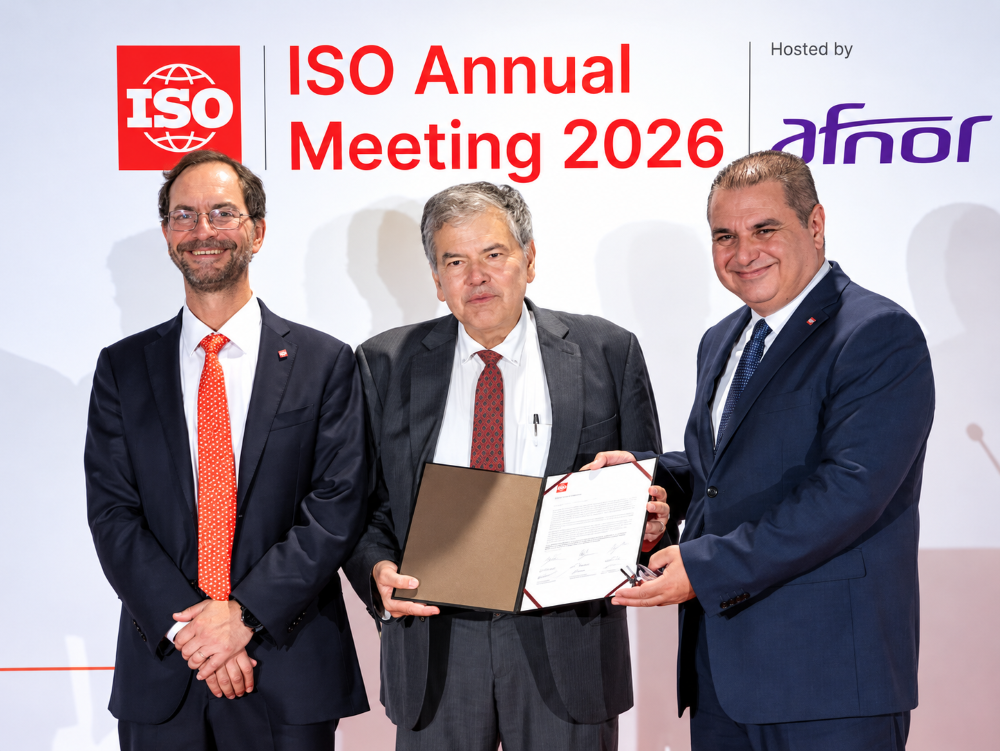
From September 28 to October 2, 2026, Paris will host the ISO Annual Meeting, a major event in the field of international standardization. Under the theme“Building trust in a changing world,”this year’s event will bring together thousands of experts, public policymakers, industry representatives, and national standards organizations to address a central question: How can we build trust in a world facing climate, technological, and societal transitions?
For international companies, several lessons are already becoming clear.
1. Trust is becoming a strategic factor in competitiveness
The strongest message from this edition is undoubtedly this: trust can no longer be taken for granted. In a context marked by geopolitical tensions, rapid technological change, sustainability requirements, and evolving stakeholder expectations, organizations must now demonstrate their ability to be reliable, transparent, and accountable.
In this context, international standards serve as a common language for building trust among customers, suppliers, investors, government agencies, and citizens. Certified management systems thus become strategic management tools that go far beyond mere compliance.
2. Artificial intelligence is moving from the experimental stage to the governance stage
Among the event’s major themes, artificial intelligence takes center stage alongside environmental issues and international trade. The challenge is no longer simply to innovate, but to deploy AI in a responsible, secure, and controlled manner.
This trend confirms the growing importance of AI governance frameworks and the need for organizations to develop new skills. Team training, risk management, ethics, and governance are becoming priority issues for international players.
3. Climate, resilience, and adaptation are becoming operational priorities
Discussions on climate change also reveal a notable shift. The debate is no longer focused solely on reducing emissions but increasingly on adapting to the already visible impacts of climate change. Several sessions are devoted to regional resilience, water resources, and the investments needed to prepare for climate-related risks.
For companies operating internationally, this trend translates into heightened expectations regarding risk management, business continuity, and environmental performance.
4. Nature, sustainable development, and societal impact are at the heart of the strategy
The prominence given to “People and Planet” themes highlights another major trend: environmental and societal issues are no longer peripheral. Biodiversity, inclusion, leadership, sustainable development, and regional impact are now considered drivers of performance and long-term value creation.
This vision aligns with the growing expectations of international markets regarding social responsibility and contributions to the Sustainable Development Goals.
5. A New Generation of Standards to Support Global Transformations
The Paris edition comes at a particularly eventful time for international standardization, marked notably by the recent launch of new standards related to the SDGs and by developments in the world’s most widely used management standards.
The message from the international community is clear: standards are no longer limited to defining requirements. They now serve as tools to support major economic, environmental, and digital transitions.
Conclusion
By welcoming the global standards community to Paris, AFNOR reaffirms its role as a bridge between international challenges and the operational needs of organizations. The discussions at this 2026 event show that tomorrow’s priorities are already here: trust, artificial intelligence, climate resilience, sustainability, and responsible governance. These are all areas where certification, assessment, and skills development serve as essential drivers for turning ambitions into concrete results.
Read more :