

Logo_100yearsAfnor_CMYK_White

Quality and digital - Part 3 of the AFNOR Group study

Facebook
Email
Twitter
LinkedIn
Agri-food expertise

Having established the link between Quality and CSR in the previous article, we're now going to analyze the second pillar of tomorrow's quality: digital.
For this major international study in 2023, the AFNOR group questioned over 1,300 corporate quality decision-makers of 37 different nationalities.

Another major concern that decision-makers believe will shake up quality in the years to come is technology - more specifically, digital technology, automation, data...

Because the question of digital adoption arises, often because of the inequalities linked to its use or the priority given to following its (growing) news on a global scale.

A quality decision-maker in the UK shares his views on the progress of digital technology in his country: " Automation is underway, more and more work is being done remotely, and the use of artificial intelligence is set to revolutionize all sectors. We can already speak of the fourth industrial revolution! In our business, we now audit companies whose employees' day-to-day work is carried out essentially in the cloud, without offices... we carry out remote audits with them."

In India, however, there is still a long way to go, as skills and knowledge need to evolve at the same pace as technology. As one decision-maker puts it: "The challenge is to bring technology and technical knowledge up to par with the awareness and uses of employees and employers".

Digital technology appears to be a solution for mastering quality requirements.

For the United States, India and Mexico, the use of digital technology is essential.

Heterogeneous digital literacy
In France: "In broad terms, today's quality performance departments are moving towards greater digitalization of their activities. But this shift takes time, and habits die hard! For example, 5 years ago, while the use of Word documents was becoming widespread, order forms and similar documents were still being printed and signed by hand..." says a quality professional.

In the digital sector, several topics are involved: data governance, artificial intelligence, industry of the future, machine learning, quality 4.0, blockchain and NFT.

For 24% of those surveyed, data governance and for 21%, artificial intelligence (AI) are the hottest topics for quality decision-makers, whether or not they are already working on these subjects.

NFT and blockchain are less the focus of attention, with many declaring that they are unfamiliar with these subjects.

Digital technology as a solution to quality requirements
Despite these differences in understanding of new technologies, there is unanimity when it comes to using digital technology to meet quality requirements, particularly in the USA, India and Mexico.

For 23% of decision-makers, digital technology is above all a means of anticipation (this is even truer in France).

For the Germans, the British and the Americans, it's the "scaling up" issues that come to the fore.

Tools for traceability (blockchain, NFT...), in particular, appear at the bottom of the list, with only 16% of topics of interest to quality decision-makers, no doubt due to a lack of knowledge on these very subjects.

Automation to boost quality
Nearly 7 out of 10 of the decision-makers surveyed see automation as enhancing process and product quality.

On the other hand, investment does not yet seem to be commensurate with the huge task it represents. Indeed, less than a quarter say their organization is investing in automation to improve quality performance.

In any case, whether or not we use data, whether or not we automate all or part of our processes, the human being will (for the time being) always be ahead of or behind the machine. As these quality decision-makers tell us, you can't bet everything on technology.

Human intelligence remains key. This Japanese decision-maker confirms that we will have to work on the subject of skills: "We think that securing human resources will be the biggest problem in the future. If we can't secure our staff, it will be difficult to provide good quality services".

Data to secure and improve quality
Another important topic is data. This field seems more advanced than automation. 3 out of 10 decision-makers point to the maturity of their actions. For the others, more needs to be done.

Nevertheless, 7 out of 10 quality decision-makers worldwide see data as a lever for quality improvement, and point out that one of the major challenges is data security.

The importance of data is of fundamental importance in all our discussions: it is seen as a real strategic asset for the company.

But the challenge lies in mastering and exploiting all this data, because as one German decision-maker put it:"This is the theme of Industry 4.0, there is always more data collected, aggregated and stored than is ultimately needed, often only 5% of the data collected is used operationally and productively...".

In conclusion, the use of digital technology and the exploitation of data have become strategic issues for the company. This knowledge is used to better understand customers, the market and future developments!

Read more

Download the summary of the international quality survey

Protecting and respecting privacy

The processing of personal data is necessary for the examination of your request, made in your capacity as a professional, to AFNOR Group. Where applicable, this data may also be used to send you commercial information.

In accordance with current European regulations, you have rights of access, rectification, erasure, withdrawal of consent, limitation of processing, opposition to processing and portability concerning your data.

These rights may be exercised by sending a message to the AFNOR DPO.

French speakers: Click here.

English speakers: Click here.


Detailed information on the use of your data and the exercise of your rights can be found in the AFNOR Group's charter on the protection of personal data and privacy.

Click here to find out more.

latest news
from the international network

Agri-food expertise
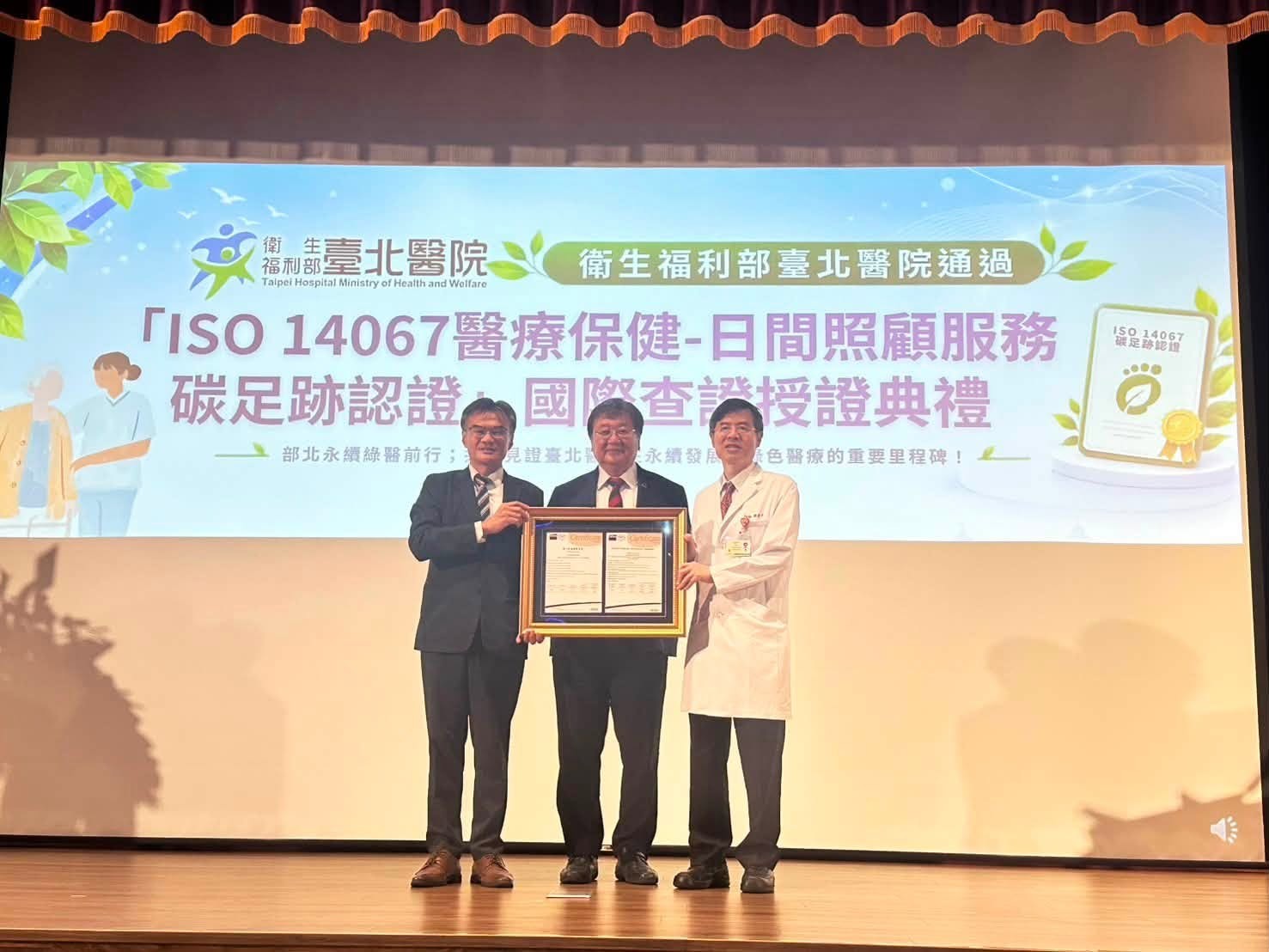
ISO 14067 Taiwan
Taiwan

"Fobao International Certification" Completes ISO 14067 Product Carbon Footprint Verification for the Department of Anesthesiology at Shuanghe Hospital

"Fabao International Certification" recently announced that the Department of Anesthesiology at "Shuanghe Hospital" has completed Taiwan's first ISO 14067:2018 product carbon footprint verification "classified by anesthesia method" and obtained a verification statement. These verification results confirm that the hospital has established a system for managing the carbon footprint of its surgical anesthesia services that complies with international standards. As an internationally recognized third-party verification body, "Fabao International Certification" conducted this verification in accordance with the ISO 14067 standard, independently assessing the carbon footprints of four anesthesia methods—endotracheal intubation, intravenous anesthesia, mask anesthesia, and spinal anesthesia—in the Anesthesiology Department of "Shuanghe Hospital." The verification process confirmed that the hospital’s data collection, emissions calculation, and management procedures comply with international standards. The verification results show that, regardless of the type of anesthesia, over 80% of carbon emissions are concentrated during the surgical anesthesia administration phase, with the primary sources being energy use and equipment operation. Operating rooms have long been the most resource-intensive units in hospitals, accounting for approximately one-quarter of the hospital’s total carbon emissions. These verification findings provide a scientific basis for precisely identifying carbon reduction targets and optimizing medical processes in the future. The professional verification team at “Fasbo International Certification” noted that healthcare institutions breaking down their carbon footprint assessments to the level of clinical operations demonstrates that sustainability management is deeply embedded in their daily operational processes. Shuanghe Hospital’s completion of this verification highlights concrete progress in the healthcare industry’s transition toward net-zero emissions. "Fasbo International Certification" has long provided product carbon footprint verification services, assisting various industries in establishing credible environmental performance data. In the future, it will continue to promote the implementation of sustainable governance goals in Taiwan’s healthcare and related industries through professional verification.

Read more "
Taiwan ISO 14067
Taiwan

"Fobao International Certification" Completes ISO 14067 Product Carbon Footprint Verification for "Yatong Hospital's" SBRT Services

"Fabao International Certification" recently announced that the Department of Radiation Oncology at "Yatong Hospital" has completed the ISO 14067:2018 product carbon footprint verification for its stereotactic body radiation therapy (SBRT) services for breast cancer and prostate cancer, and has officially been awarded a verification statement. These verification results confirm that the hospital’s carbon footprint data and management system comply with international standards. As an internationally recognized third-party verification body, "Fabao International Certification" conducted an independent assessment of the carbon footprint scope definition, data collection, calculation methods, and selection of emission factors for "Yatong Hospital’s" SBRT services in accordance with the ISO 14067 standard. The verification process confirmed that the carbon emission data for these services is complete, consistent, and transparent, and can serve as a basis for future carbon reduction management. The SBRT technology implemented by “Yatong Hospital” significantly reduces the number of treatment sessions required—which typically ranges from 20 to 39 in traditional radiation therapy—to just 5 sessions. Verification results show that through optimized electricity usage, reduced medical consumables, and minimized waste, overall carbon emissions are approximately 60% lower than those of traditional treatment regimens. This achievement also reduces the transportation burden and time costs for patients traveling to and from the hospital. The professional verification team at “Fasbo International Certification” noted that the verification of a medical service’s product carbon footprint signifies that the institution has incorporated environmental performance into its service quality management system. “Yatong Hospital” has established a carbon footprint management system compliant with international standards, creating an important practical case study for the low-carbon transition of Taiwan’s healthcare industry. “Fabao International Certification” has long provided product carbon footprint verification services, assisting various industries in establishing credible environmental performance data. In the future, it will continue to promote the implementation of sustainable transformation goals in the healthcare and related industries through professional verification.

Read more "
Taiwan

"Fobao International Certification" Completes ISO 14064-1 Greenhouse Gas Inventory Verification for "Shengjie Construction"

"Fabao International Certification" recently announced that "Shengjie Construction Co., Ltd." has successfully passed third-party verification of its ISO 14064-1:2018 greenhouse gas inventory. This verification confirms that the company's greenhouse gas emissions data and management system comply with international standards, demonstrating concrete results in institutionalizing its commitment to sustainability. As an internationally recognized third-party verification body, "Fabao International Certification" conducted an independent assessment of "Shengjie Construction’s" organizational boundaries, emission source identification, and data collection and calculation processes in accordance with the ISO 14064-1 standard. The verification process confirmed that the company has established a systematic foundation for carbon management, and that its inventory results are reliable and can serve as a basis for formulating future carbon reduction strategies. Sheng Jie Construction, a construction firm in the Taoyuan area, proactively implemented ISO 14064-1 verification and published a sustainability report despite the absence of mandatory regulatory requirements. In addition to promoting low-carbon building materials and energy-efficient designs on the environmental front, the company has long promoted a “community health check” mechanism on the social front, assisting communities where homes have already been delivered in maintaining building quality, thereby demonstrating its commitment to resident relations and the management of the building’s entire life cycle. The professional verification team at “Fasbia International Certification” noted that a company’s voluntary adoption of greenhouse gas inventory verification signifies that it views carbon management as an essential component of organizational governance. By establishing a management system compliant with international standards, “Sheng Jie Construction” has set an important practical example for the sustainable development of Taiwan’s construction industry. "Fasbia International Certification" has long provided greenhouse gas inventory verification services, assisting various industries in establishing credible environmental performance data. In the future, it will continue to promote the implementation of sustainable governance goals by Taiwanese companies through professional verification.

Read more "
Back to top