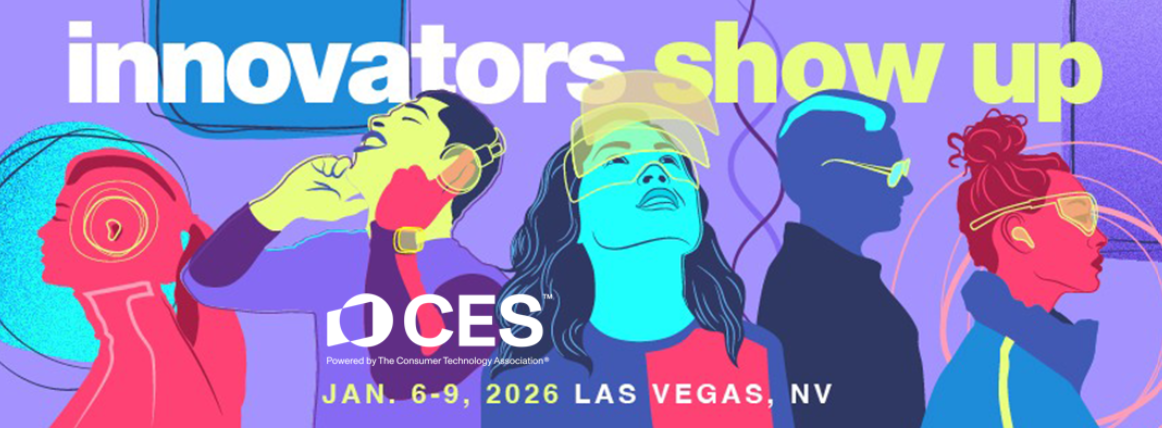
Digital transformation continues to disrupt organizations, and the end of 2025 confirms a trend that has become unavoidable: demand for digital skills is growing faster than companies' ability to meet it. This dynamic was further reinforced in early January 2026 at CES in Las Vegas, where all of the innovations on display were based on advanced technological skills.
A global rise in demand
By 2030, 50% of jobs worldwide will require advanced digital skills. In France, more than 1.2 million people were recruited in the digital sector in 2024, but 60% of workers still do not meet the level expected for their job (Observatoire Pix). The pressure is therefore global: companies are looking for people who can understand, secure, and use digital technologies, regardless of their sector.
The most sought-after skills
The needs are concentrated in a few key areas:
- AI and automation, now integrated into most business tools.
- Cybersecurity has become critical in light of the rise in attacks.
- Data and analytics, essential for managing business.
- Development and cloud computing: drivers of digital transformation.
These skills are no longer reserved for experts: they are becoming cross-functional and relevant to all professions.
What CES 2026 reveals
CES 2026 confirmed that the digital wave is only just beginning. Three major trends are emerging:
- Generative AI is becoming an industry standard. Companies are no longer asking whether they should integrate AI, but how. Demonstrations have shown AI embedded in everyday objects, professional tools, and industrial systems. This is driving demand for AI, data, and cybersecurity skills.
- Cybersecurity embedded in all products. From autonomous vehicles to domestic robots, every innovation presented incorporated advanced security mechanisms. Cyber skills are becoming a prerequisite for all technical professions.
- The rise of immersive and collaborative technologies. Mixed reality , digital twins, intelligent voice interfaces: uses are multiplying. Companies are looking for skills in UX, digital design, and immersive development.
The CES has thus confirmed that digital literacy is no longer a competitive advantage, but a prerequisite for survival.
Some key KPIs that confirm the urgency of digital transformation
- Demand for AI skills has increased by 344% in five years (LinkedIn Global Skills Report).
-
Data-related professions are growing at an annual rate of 30% (McKinsey Global Institute).
-
75% of companies plan to integrate AI into their processes by 2027 (WEF).
-
50% of industrial tasks will be automated by 2030 (McKinsey).
- Global investment in Industry 4.0 will exceed $400 billion by 2026 (IDC).
The strategic role of certification
In a context where digital skills are becoming essential, certifications play a decisive role in structuring practices, securing usage, and supporting transformation. They enable organizations to validate constantly evolving expertise and provide an internationally recognized framework.
To meet these needs, AFNOR International offers a range of services based on ISO standards that are particularly well suited to today's digital challenges:
- ISO 27001 – Information security management. The global benchmark for structuring cybersecurity, protecting data, and strengthening resilience against cyber threats.
- ISO 20000-1 – IT service management. An essential framework for professionalizing IT practices, improving service quality, and supporting digital transformation.
- ISO 22301 – Business continuity. Essential for ensuring an organization's ability to maintain its critical activities in the event of a digital or operational incident.
- ISO 9001 – Quality management. Still essential, particularly for structuring training, software development, and digital services processes.
- ISO 42001 – Artificial intelligence management. The new international standard dedicated to responsible AI governance. It helps organizations to regulate the development, deployment, and use of AI in an ethical, reliable, and transparent manner. A key reference at a time when generative AI and autonomous systems are becoming widespread.
- Trusted Blockchain Certification. An AFNOR offering that meets the growing demand for traceability, data integrity, and transparency in digital processes.
These standards enable organizations to professionalize their digital practices, strengthen the trust of their customers and partners, and support the upskilling of their teams in a rapidly changing technological environment.
Read more :