

Logo_100yearsAfnor_CMYK_White
Home > International News > European AI Act: Turning Regulatory Constraints into a Competitive Advantage with ISO/IEC 42001

European AI Act: Turning Regulatory Constraints into a Competitive Advantage Through ISO/IEC 42001

Facebook
Email
Twitter
LinkedIn
Agri-food expertise

In just a few years, artificial intelligence has evolved from the experimental stage to that of a strategic infrastructure. The question now is no longer whether companies will use AI, but how they can do so responsibly, securely, and in compliance with regulatory requirements.

With the gradual implementation of theEuropean AI Act, organizations must take a new step: demonstrating their ability to manage AI-related risks while continuing to innovate.

In this context, the ISO/IEC 42001, the first international standard dedicated to artificial intelligence management systems, emerges as a practical tool for structuring governance and strengthening stakeholder confidence.

The AI Act: A Major Change for All Organizations Operating in Europe
Adopted by the European Union, the AI Act is the world’s first comprehensive regulatory framework dedicated to artificial intelligence. It is based on a risk-based approach and imposes specific obligations on providers and users of AI systems. The main provisions concerning high-risk systems have been in effect since August 2026.

In particular, the companies in question must demonstrate:

  • appropriate risk management;
  • robust data governance;
  • appropriate human supervision;
  • the traceability of decisions;
  • guarantees regarding cybersecurity and transparency.

The standards are high. Penalties can reach 35 million euros or 7% of annual global revenue for certain serious violations.

AI Adoption Is Outpacing Governance
The challenge is all the more significant given that AI adoption is advancing rapidly.
According to Eurostat data compiled in a recent sectoral study, 20% of European companies with more than 10 employees now use AI technologies, compared to 13.5% the previous year.
At the same time, an IBM study published in October 2026 reveals that:

  • 80% of executives surveyed in Europe and the Middle East report that an AI-related incident has been escalated to the executive committee or board of directors in the past 12 months;
  • Only 37% believe they have a governance system capable of supporting the large-scale deployment of AI agents;
  • Only 37% have conducted a formal assessment of the financial risks associated with gaps in their AI governance.

These figures illustrate a simple reality: innovation often moves faster than regulatory mechanisms.

ISO/IEC 42001: The Reference Framework for Structuring AI Governance
Faced with these new challenges, organizations are seeking proven methods to guide their use of AI.
Published by ISO and IEC, ISO/IEC 42001 is the first certifiable international standard dedicated to artificial intelligence management systems.

It provides a structured approach that makes it possible to:

  • define an AI policy and clear responsibilities;
  • identify and manage risks associated with AI systems;
  • implement appropriate governance processes;
  • monitor and continuously improve usage;
  • integrate the ethical, regulatory, and operational aspects of artificial intelligence.

Another major advantage: ISO/IEC 42001 is based on the same framework as widely recognized standards such asISO 9001 and ISO/IEC 27001, making it easier to integrate into existing management systems.

ISO/IEC 42001 Certification: Much More Than Just a Compliance Initiative
While the AI Act sets forth legal obligations, ISO/IEC 42001 provides a concrete organizational solution.

In particular, certification allows you to:

  1. Building Trust > Customers , investors, partners, and regulatory authorities now expect greater transparency regarding the use of AI. Independent certification sends a strong signal about the maturity of the governance framework in place.
  2. Preparing for Future Regulatory Requirements > Although it is not a substitute for the AI Act, ISO/IEC 42001 covers many elements that are essential for rigorous AI risk management.
  3. Accelerating AI Projects > Clear governance reduces uncertainty, facilitates decision-making, and ensures secure large-scale deployments.
  4. Demonstrating Responsible Commitment > Trust is becoming a key differentiator in AI projects. Organizations that can demonstrate their ability to manage risks will enjoy a sustainable competitive advantage.

How do I obtain ISO/IEC 42001 certification? Contact us.

Making Responsible AI a Driver of Performance
Artificial intelligence opens up considerable opportunities for businesses. But its value will increasingly depend on organizations’ ability to ensure robust, transparent, and compliant governance.

The AI Act now sets the regulatory framework. ISO/IEC 42001 provides the methodology for preparing for it and turning compliance requirements into a genuine strategic advantage.
For organizations that want to deploy AI with confidence, the issue is no longer just about innovating, but about demonstrating that they are innovating responsibly.

Read more :

latest news
from the international network

Agri-food expertise
Taiwan

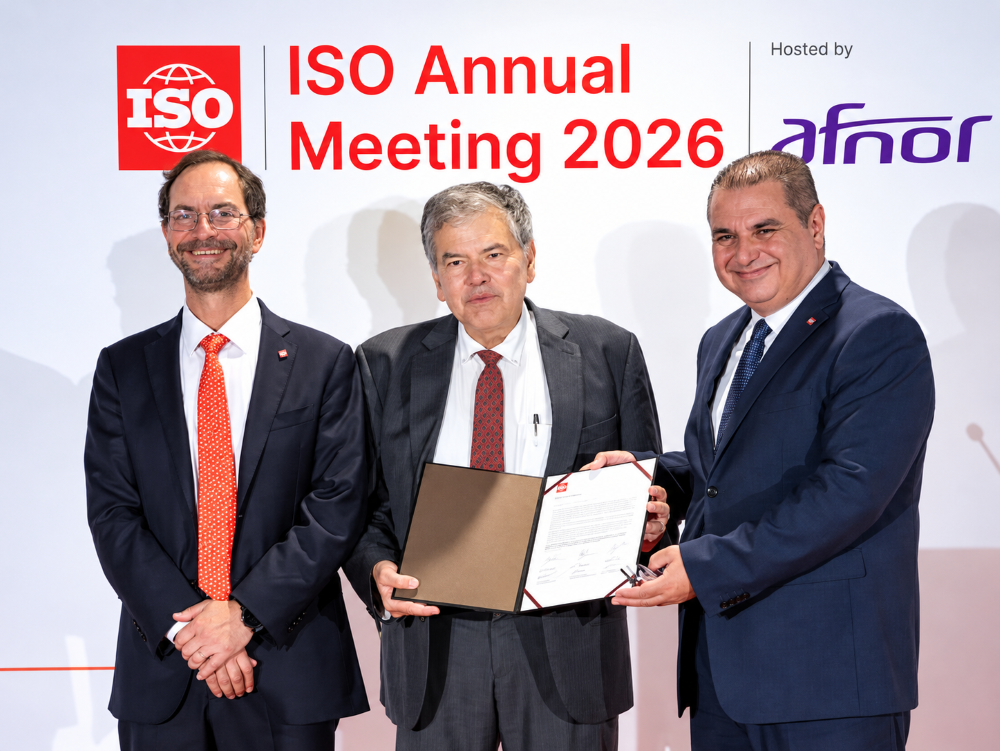
Building Global Trust Through a Century of Experience—AFNOR Successfully Hosts the 2026 Annual General Meeting of the International Organization for Standardization (ISO)

From September 28 to October 2, the 2026 International Organization for Standardization (ISO) Annual General Meeting, hosted by the French Standards Association (AFNOR), was successfully held in Paris, France. As AFNOR celebrated its 100th anniversary, representatives from standardization bodies, policymakers, industry experts, and industry representatives from more than 170 countries and regions around the world gathered in Paris to discuss the key role of international standards in addressing common global challenges. The theme of this year’s conference was “Building Trust in a Changing World.” The agenda centered on three key areas: “People and the Planet,” “Emerging Technologies and Artificial Intelligence,”“Trade and Development.” On the first day of the conference, ISO/UNDP 53001:2026, “United Nations Sustainable Development Goals Management System—Requirements,” was released to help organizations transform the Sustainable Development Goals from commitments into actions that can be managed, implemented, and measured. The conference also hosted a special session on the new ISO 9001 Quality Management System standard, featuring discussions on how quality management can help organizations turn trust into a strategic advantage. This year’s conference heard the ISO Secretary-General’s work report and focused on reviewing major governance matters, including the implementation of “ISO Strategy 2030,” the digital transformation of standards, business policy, the election of governance officers for the 2027–2029 term, and the 2027 financial budget. The winners of the 2026 Lawrence E. Archer Leadership Award were also announced. Throughout its century-long history, AFNOR has consistently been a key participant and driving force in global standardization governance. During the meeting, following a proposal by AFNOR and approval by ISO members, ISO officially released the “Paris Declaration” on addressing climate change in the global standards sector, calling on member countries to rely on international standards to strengthen climate adaptation capacity and development resilience, and to advance the implementation of the global Sustainable Development Goals.

Read more "
Taiwan

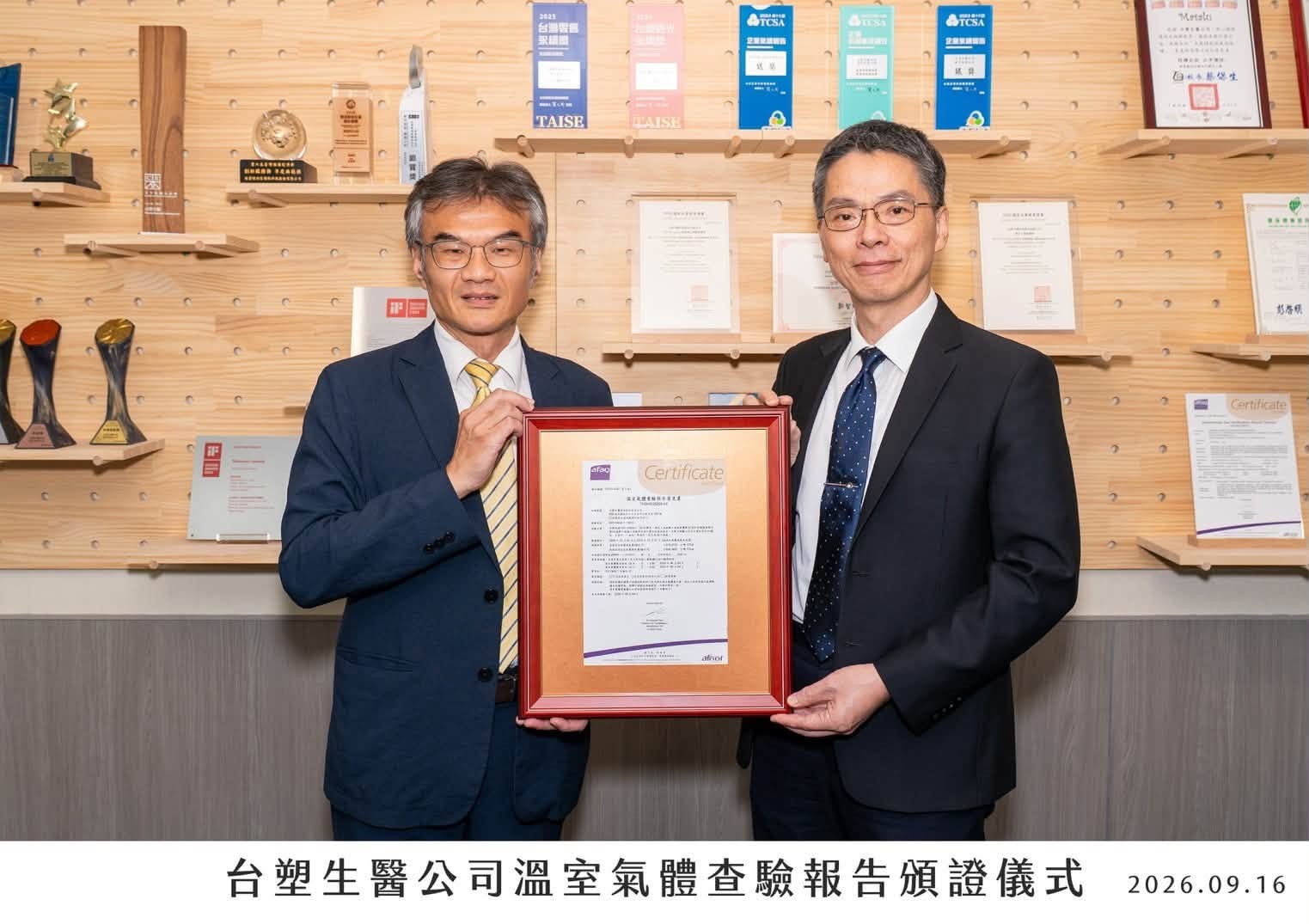
"Fobiao International Certification" Completes ISO 14064-1 Greenhouse Gas Inventory Verification for "Formosa Biotech"

“Fabao International Certification” recently announced that “Formosa Biotech” has successfully passed the ISO 14064-1:2018 greenhouse gas inventory verification, and a certification ceremony was held recently. This verification confirms that the company’s greenhouse gas emissions data and management system comply with international standards. As an internationally recognized third-party verification body, “Fabo International Certification” conducted this verification in accordance with the ISO 14064-1 standard,and conducted an independent assessment of Formosa Biotech’s organizational boundaries, identification of emission sources, and data collection and calculation processes. The verification process confirmed that the company has established a systematic foundation for carbon management, and that its inventory results are complete and reliable, serving as a basis for developing future carbon reduction strategies. To promote sustainable development, “Formosa Biotech” has not only completed its greenhouse gas inventory but has also implemented the principles of the circular economy in its product bottle recycling program, enabling resources to re-enter the circular system and reducing resource consumption and carbon emissions at the source. Through systematic management, the company has demonstrated concrete actions ranging from carbon inventory and carbon reduction initiatives to resource recycling. The professional verification team at “Fabao International Certification” noted that a company’s successful verification of its greenhouse gas inventory indicates it has established a credible carbon management mechanism capable of assessing its environmental performance using scientific data. “Formosa Biotech” has established a management system compliant with international standards, setting an important practical example for the net-zero transition of Taiwan’s biotech industry. “Fabao International Certification” has long provided greenhouse gas inventory verification services, assisting various industries in establishing credible environmental performance data. In the future, it will continue to promote the implementation of low-carbon sustainability goals across Taiwan’s industries through professional verification.

Read more "
Taiwan Banner
Taiwan

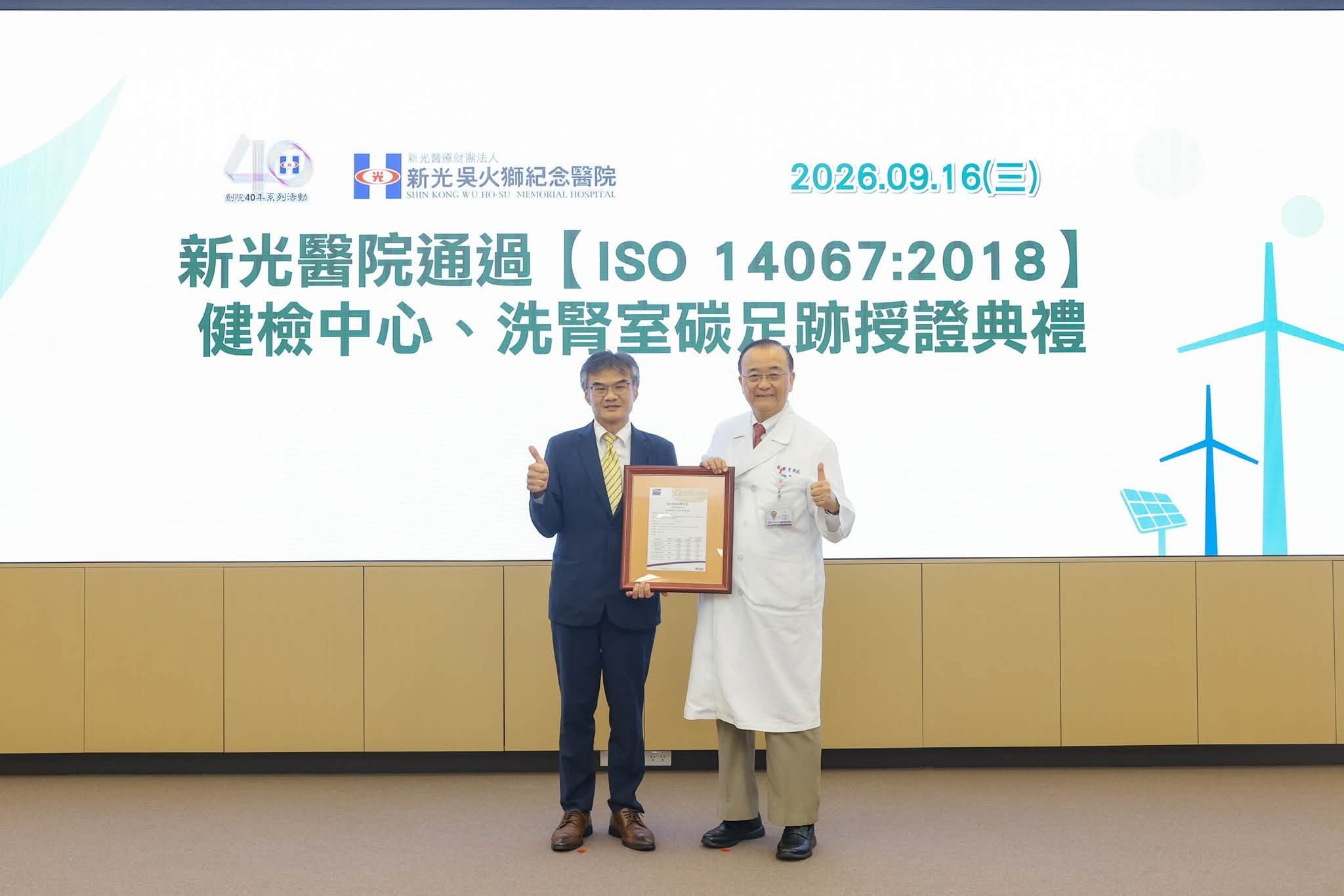
「法標國際認證」完成「新光醫院」ISO 14067產品查證

「已成功通過ISO 14067:2018產品碳足跡查證,查證範圍涵蓋健檢中心之無痛腸胃鏡、MRI、CTA、PET,以及血液透析、腹膜透析等六項醫療服務。此項查證確認該院醫療服務之碳排放數據與管理制度符合國際標準要求。 ISO 14067標準,對「新光醫院」各項醫療服務之碳足跡範圍界定、數據蒐集、計算方法及排放係數選用進行獨立評估。查證範圍涵蓋高階影像設備能源使用、RO逆滲透水處理、醫療耗材及病患交通等生命週一致性與透明度。 「新光醫院」將碳足跡管理導入醫療服務現場,透過系統化盤查掌握各項服務之碳排放熱點,為後續減碳措施提供科學依據。此項查證展現醫療機構將環境績效納入服務管理系統之具體作為。 「法標國際認證」專業查證團隊指出,醫療服務通過產品碳足跡查證,代表「新光醫院」已建立可量化、可檢視之碳管理基礎。「新光醫院」建立符合國際標準之管理,為台灣醫療產業之淨零轉型建立重要實踐案例。 「法標國際認證」長期提供產品碳足跡查證服務,協助各產業建立可信之環境促進醫療及相關產業落實低碳永續目標。

Read more "
Back to top