

Logo_100yearsAfnor_CMYK_White

[Webinar] Corporate Quality Culture: An Essential Pillar of Performance

Facebook
Email
Twitter
LinkedIn
Agri-food expertise

Let's try to understand how the subject of Quality today demands a return to the human rather than the organizational and technical, with our expert Vincent Blache.
on Thursday, February 27 at 11 a.m. to share his thoughts and ideas with you
during an exceptional webinar (free, registration required).

👉 Register now here 📅

In a world where competition is increasingly fierce, companies need to stand out by their ability to offer quality products and services while optimizing their internal processes. Quality culture has become a strategic issue for organizations wishing not only to satisfy their customers, but also to obtain recognized certifications such as SO 9001.

What is Quality Culture?

In 2022, the ISO 10010 standard, promoted by the Chinese standardization secretariat, put the spotlight on a crucial subject: Quality Culture. ISO 10010 aims to put people back at the heart of quality. It reminds us that technological tools, however advanced, cannot replace reflection, commitment and human rigor. By promoting this standard, China is demonstrating a vision of the future in which quality is not limited to organizational and technical processes, but fully integrates the human dimension.

Solutions exist to meet these challenges. Training and certification appear to be essential levers for strengthening the quality culture within organizations. Quality culture is based on a corporate philosophy that places quality at the heart of all decisions and actions. It implies the collective involvement of all employees, from management to operational teams, to achieve common goals in terms of customer satisfaction, operational efficiency and compliance with standards. A company that cultivates a quality culture fosters transparency, accountability and innovation. It encourages employees to identify areas for improvement and actively participate in problem-solving. This proactive approach reduces errors, optimizes processes and builds customer confidence.

ISO 9001: A Structuring Tool for Quality

ISO 9001 certification is a worldwide benchmark for quality management. It provides a structured framework for setting up an effective and sustainable quality management system (QMS). Obtaining this certification demonstrates that a company is capable of meeting its customers' requirements while complying with current regulations.

The benefits ofISO 9001 are numerous:

  • Improved customer satisfaction: By focusing on customer needs and expectations, the company strengthens its reputation and loyalty.
  • Process optimization: The standard encourages the analysis and continuous improvement of processes, leading to greater operational efficiency.
  • Employee commitment: By involving employees in the quality process, the company encourages their motivation and support for shared objectives.
  • Competitive advantage: ISO 9001 certification is a major asset for differentiating ourselves in the market and winning new customers.

Why take part in our Quality Culture Webinar?

Would you like to find out more about how to develop a quality culture within your company? Don't miss our exclusive webinar on the subject(available in French only) on THURSDAY FEBRUARY 27 at 11am (Paris time)!

👉 Register now here 📅

This webinar is the ideal opportunity to discover how quality culture can transform your organization and give you the keys to achieving operational excellence. Whether you're an SME or a large corporation, this training will provide you with valuable insights to boost your performance.

latest news
from the international network

Agri-food expertise
Taiwan

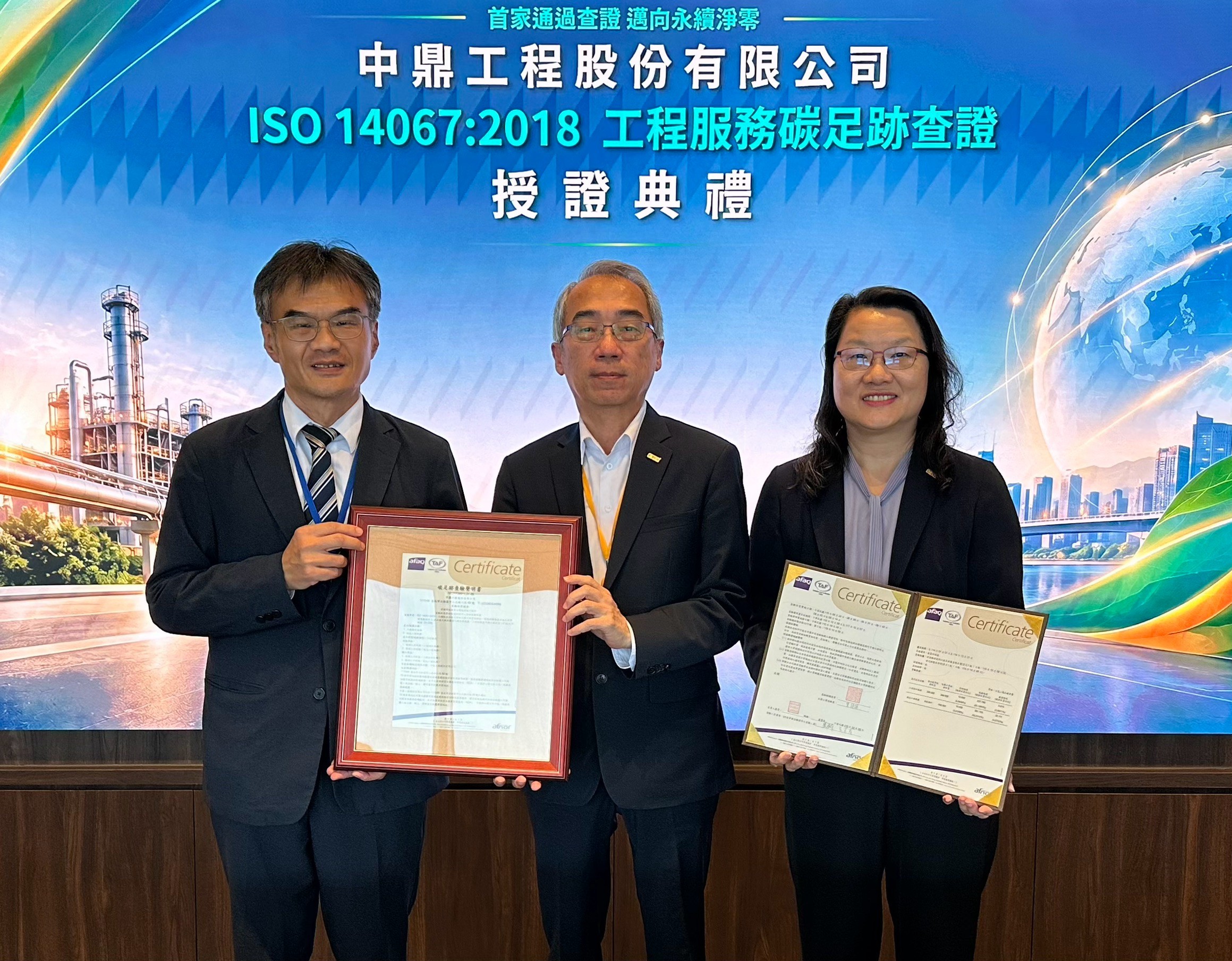
"Fobiao International Certification" Completes ISO 14067 Carbon Footprint Verification for "Zhongding Engineering"

“Fabao International Certification” recently announced that “Zhongding Engineering” has successfully completed ISO 14067:2018 product carbon footprint verification, with the scope of verification covering engineering design services and turnkey engineering services. This verification confirms that the company’s carbon emissions data and management system for its engineering services comply with international standards, making it the first company in Taiwan to complete verification in accordance with the Product Category Rules (PCR) for engineering services. As an internationally recognized third-party verification body, “Fabao International Certification” conducted this verification in accordance with the ISO 14067 standard,and conducted an independent assessment of the carbon footprint scope definition, data collection, calculation methods, and selection of emission factors for “CECC Engineering” services. The verification scope covered life cycle stages ranging from raw material procurement and service delivery to waste disposal. The verification process confirmed that the carbon footprint data possess completeness, consistency, and transparency. “Zhongding” uses “each working hour” as the functional unit to minimize the impact of differences in the scale and nature of various engineering projects on the assessment results, thereby establishing a consistent calculation benchmark. Through systematic inventory assessments, the company has identified carbon emission hotspots in its engineering services, providing a scientific basis for subsequent carbon reduction measures. This verification demonstrates concrete actions taken by the engineering services industry to integrate environmental performance into its management systems. The professional verification team at “Fabao International Certification” noted that the engineering services’ successful product carbon footprint verification signifies that the company has established a quantifiable and verifiable foundation for carbon management. “CEC” has established a management system compliant with international standards, creating an important practical example for the net-zero transition of Taiwan’s engineering industry. “Fabao International Certification” has long provided product carbon footprint verification services, assisting various industries in establishing credible environmental performance data. In the future, it will continue to promote the implementation of low-carbon sustainability goals in the engineering and related industries through professional verification. This year’s conference heard the ISO Secretary-General’s work report and focused on reviewing the implementation of “ISO Strategy 2030,” the digital transformation of standards, commercial policy,the election of governance officials for the 2027–2029 term, and the 2027 financial budget, among other major governance matters, and announced the winners of the 2026 Lawrence E. Archer Leadership Award. Throughout its century-long history, AFNOR has consistently been a key participant and driving force in global standardization governance. During the conference, following a proposal by AFNOR and approval by ISO members, ISO officially released the “Paris Declaration” on addressing climate change in the global standards sector, calling on member countries to leverage international standards to strengthen climate adaptation capacity and development resilience, and to advance the implementation of the global Sustainable Development Goals.

Read more "
Back to top