Home > International news > Towards Sustainable Growth: The Dual Effect of Certification on Internal and External Factors

Towards Sustainable Growth: The Double Effect of Internal and External Certification

Facebook
Email
Twitter
LinkedIn
Agri-food expertise

A Strategic Asset for Internal Performance and External Credibility
In a globalized and constantly evolving economic context, certification-whether for quality (ISO 9001), the environment (ISO 14001), health and safety (ISO 45001 ) or information security (ISO 27001) -goes beyond the simple status of a label. It has become an essential transformation process, bringing together internal players and establishing recognized legitimacy with international customers, partners and investors.

Internal Gains: A Continuous Improvement Approach

Optimizing processes and reducing non-conformances
Certification encourages companies to re-examine and standardize their internal processes, thereby significantly reducing errors and non-conformities. For example, certified companies have seen their non-conformity rate drop from 8% before certification to 3% after the application of standardized procedures, a reduction of over 60%.

Employee commitment and motivation
Beyond the operational aspect, certification strengthens employee commitment. A quality working environment, with clear objectives and processes, increases pride and internal satisfaction. International internal studies show an average 15-20 point increase in employee satisfaction when quality is integrated into the company's day-to-day operations.

Measuring progress with relevant KPIs
The certification process relies on essential KPIs to quantify its transformative effects. For example, process improvements are reflected in a drop in the non-compliance rate, typically from 8% to 3%, reflecting more rigorous application of internal standards. At the same time, employee satisfaction scores have risen from 70/100 to 85/100, attesting to greater commitment and a better working atmosphere. Productivity, meanwhile, has been boosted, with an increase from 50 to 65 units produced daily, a sign of enhanced operational efficiency. Last but not least, control of operating costs, with a reduction of around 15%, confirms that standardization of procedures also enables financial optimization. Taken together, these indicators provide precise, dynamic monitoring of continuous improvement within the company, while consolidating its credibility on international markets.

These indicators, backed up by international studies, demonstrate how structuring and standardization can boost internal performance.

External gains: Credibility, trust and new markets

Enhancing credibility and trust
Externally, certification is a powerful vote of confidence. An internationally recognized approach reassures customers and partners of the quality and reliability of products and services. According to some studies, up to 80% of consumers prefer a certified company, seeing recognition as a guarantee of seriousness and excellence.

Access to new markets and competitive advantage
In a globalized environment, certification is a major asset for accessing regulated markets. In sectors such as agri-food or the automotive industry, standards are often a prerequisite for establishing partnerships or responding to international calls for tender. European companies certified to ISO 9001 have seen their sales on foreign markets increase by 20 to 25%, two years after certification.

Enhanced brand image
Certification enhances a company's image, providing visibility and global recognition. Net Promoter Score (NPS) improvement is often noted, with an increase of 10 to 15 points, reflecting improved reputation and customer loyalty.

Inspiring international examples
Around the world, numerous examples demonstrate the benefits of certification:

  • In Europe: Small and medium-sized manufacturers have reported a 30% increase in productivity and a significant reduction in costs linked to non-conformities.
  • In Asia: ISO 14001has enabled major manufacturing companies to reduce their energy costs by 15% and their environmental footprint, ensuring a strong position in the global market.

Launching a Certification Scheme: How and Why?
Launching a certification scheme requires the mobilization of the entire company. The key stages :

  1. Internal audit and diagnosis: Identify strengths and weaknesses to guide your approach.
  2. Defining objectives and choosing KPIs: Select indicators aligned with strategic objectives.
  3. Team training and involvement: Engage and train staff in new procedures.
  4. Implementation and ongoing monitoring: Use dashboards to assess the impact of certification.

AFNOR International supports companies every step of the way, offering technical expertise and high-performance analysis tools to measure impact.

Additional perspectives
Certification is a strategic investment that goes beyond a simple label. It enables us to improve our internal processes - optimizing quality, productivity and employee commitment - while reinforcing our credibility and international competitiveness. In a context where rigor, transparency and performance are essential, committing to certification is an opportunity to transform and differentiate. Beyond these benefits, certification can be part of a sustainable development and digital transformation strategy. For example, the integration of real-time monitoring systems via digital platforms makes it possible to anticipate and react rapidly to market developments, guaranteeing the agility needed in today's environment. This approach, combining operational excellence and technological innovation, defines the contours of the industrial and commercial future, where quality becomes a vector of differentiation and sustainable growth.

Adopting a certification approach means opting for continuous improvement, transparency and competitiveness, all essential assets in meeting the challenges of an ever-changing global market.

Read more :

Sources

  1. https://asana.com/fr/resources/company-values-examples
  2. https://www.why.eu/indicateurs-de-performance-exemples-concrets-et-tableau-de-bord-pour-pme/

latest news
from the international network

Agri-food expertise
Taiwan 50001
Taiwan

Fengyi Electronics and Jingfeng Electronics Pass ISO 50001 Energy Management System Certification

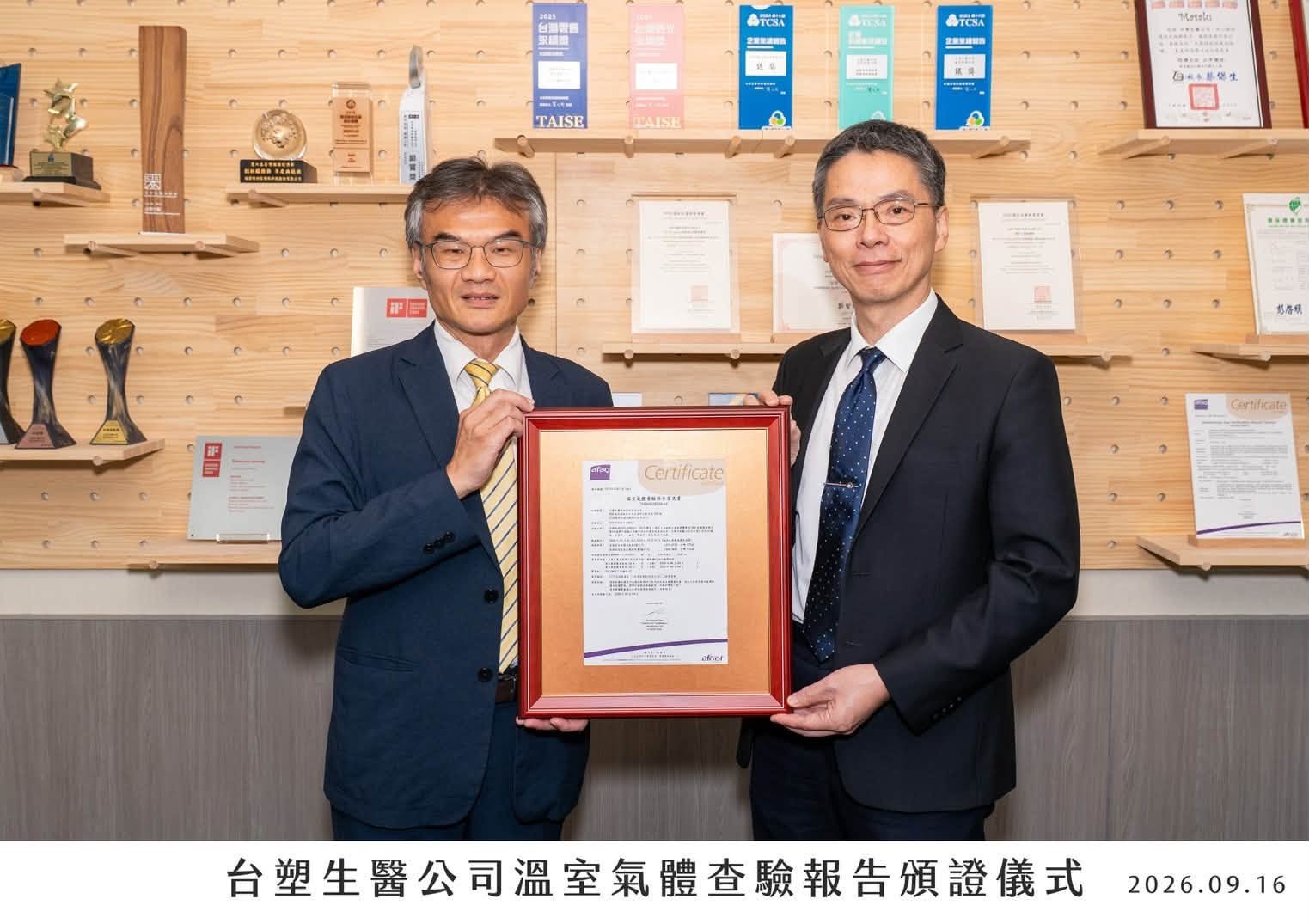
"Fabao International Certification" announced that "Fengyi Electronics Co., Ltd." and its subsidiary "Jinfeng Electronics Co., Ltd." have successfully passed the ISO 50001:2018 international energy management system certification and obtained the certificate. This certification confirms that both companies have met international standard requirements in the establishment, implementation, and maintenance of their energy management systems. FAB International Certification is an internationally recognized third-party certification body. This certification was conducted in accordance with the ISO 50001 standard and involved a comprehensive assessment of the energy baseline establishment, performance indicators, management plans, and internal audit systems of Fengyi Electronics and Jingfeng Electronics. The certification process confirmed that the group has institutionalized its energy management system, which operates effectively and demonstrates a commitment to continuous improvement. To strengthen energy governance, Fengyi Electronics Group effectively monitors and analyzes energy usage through cross-company resource integration and its own energy monitoring and management system. The simultaneous completion of this certification demonstrates the electronics industry's concrete actions in systematically managing energy efficiency and implementing energy conservation and carbon reduction. FAB International Certification points out that ISO 50001 energy management system certification helps companies systematically improve energy efficiency. Fengyi Electronics Group's certification demonstrates the ability of Taiwanese companies to meet international standards in the areas of sustainable development and energy management. SGS International Certification has long provided various management system certification services to help enterprises strengthen their operational efficiency and environmental performance. In the future, it will continue to promote the implementation of sustainable goals in Taiwan's industries through professional certification.  

Read more "
Taiwan

Taiyo Technology has obtained AS9100 and ISO 27001 management system certifications through international standard certification.

"FAB International Certification" recently announced that Taiyo Technology Co., Ltd. has successfully passed the international certification for the AS9100:2016 aerospace quality management system and the ISO/IEC 27001:2022 information security management system. These two certifications confirm that the company's management systems meet international standards in the fields of aerospace quality control and information security protection. "FAB International Certification" recently announced that "Taiyo Technology Co., Ltd." has successfully passed the international certification of AS9100:2016 Aerospace Quality Management System and ISO/IEC 27001:2022 Information Security Management System. These two certifications confirm that the company's management systems in the fields of aerospace quality control and information security protection meet international standard requirements. As a third-party certification body, "FAB International Certification" conducted a comprehensive assessment of Taiyo Technology's quality management processes, product reliability control, information asset protection, and risk management mechanisms based on the AS9100 and ISO/IEC 27001 standards. The certification results show that the company has established a complete and effective integrated management system, demonstrating its commitment to quality and information security in the high-end manufacturing field. Taiyo Technology is a professional copper foil substrate manufacturer whose products are used in communications, servers, automotive electronics, and other fields. Building on its existing multiple management systems, the company's successful AS9100 and ISO 27001 certification demonstrates its continuous pursuit of excellence and strengthens its professional capabilities as a qualified supplier in the aerospace and defense supply chain. FAB International Certification pointed out that the company's simultaneous AS9100 and ISO 27001 certification demonstrates that its management system can meet the aerospace industry's stringent quality requirements and its high emphasis on supply chain information security. Taiyo Technology's establishment of an international standard management system showcases the competitiveness of Taiwan's manufacturing industry in the high-end market. "FAB International Certification" has long provided certification services in professional fields such as aerospace and information security, assisting enterprises in aligning with international industry standards. In the future, it will continue to promote the upgrading of Taiwan's industry and its integration into the international market through rigorous certification procedures.  

Read more "
Taiwan

Taiwan Railways Administration obtains carbon footprint label for passenger transport through international certification, marking a new milestone in green transportation

Driven by the goal of net-zero carbon emissions, Taiwan Railway Administration actively promotes carbon footprint assessment and information disclosure as an important step in sustainable transformation. After review and approval by the Ministry of the Environment, TRA officially obtained the right to use the passenger transport service carbon footprint label, becoming the first traditional railway transport service provider in Taiwan to obtain the carbon footprint label and setting a benchmark for green transport services in Taiwan. The Taiwan Railway Administration (TRA), formerly known as the Taiwan Railway Bureau under the Ministry of Transportation, was established in 1887 and has a history of more than 137 years. On January 1, 2024, it was restructured into the Taiwan Railway Administration.TRC shoulders the core mission of passenger and freight transportation for the entire Taiwan railway system, covering vehicle operation, infrastructure maintenance, station management, and customer service. It also cooperates with the government in continuously promoting railway modernization projects, making it a crucial transportation infrastructure in Taiwan. Faced with the global trend of net-zero emissions by 2050, the entire social environment and industrial development are undergoing structural changes. Driven by net-zero carbon emissions, Taiwan Railways is actively promoting carbon footprint assessment and information disclosure as an important step in sustainable transformation.Through the promotion of the "2025-2026 Carbon Footprint Assessment and Carbon Reduction Plan for Stations and Passenger Transport Vehicles," and with the completion of carbon footprint verification for the "Tze-Chiang," "Chu-Kuang," and"Local/Local Express" train types. After review and approval by the Ministry of the Environment, Taiwan Railways officially obtained the right to use the passenger transport service carbon footprint label, becoming the first traditional railway transport service operator in Taiwan to obtain the carbon footprint label and setting a benchmark for green transport services in Taiwan. At the carbon footprint label disclosure ceremony, the head of operations for the Asia-Pacific region of Bureau Veritas,During this process, AFNOR Certification followed international standards to conduct carbon footprint audits and data verification for TRA's Tze-Chiang, Ju-Guang, and local/express passenger transport services to ensure data accuracy and compliance. According to the audit results,the Tze-Chiang Express generates 36 grams of carbon dioxide equivalent (CO2e) per passenger-kilometer, the Chu-Kuang Express generates 50 grams of CO2e, and the Local/Local Express trains generate 55 grams of CO2e. Taiwan Railways Administration stated that it will continue to promote system-wide carbon management based on this verification data and combine it with measures such as vehicle replacement, energy efficiency improvements, and smart railways to move towards the goal of net-zero carbon emissions by 2050.The successful collaboration between Taiwan Railway and FSC not only demonstrates Taiwan Railway's firm commitment to sustainable operations, but also highlights FSC's professional capabilities in the field of carbon management verification. Both parties will continue to work together to realize the vision of a low-carbon society and sustainable development in Taiwan.

Read more "
Back to top