

Logo_100yearsAfnor_CMYK_White

A Series of Cyberattacks: Why ISO 27001 and ISO 22301 Will Be Essential by 2026

Facebook
Email
Twitter
LinkedIn
Agri-food expertise

In February 2026, several cyberattacks targeted critical infrastructure: a European electricity operator, a major Asian port, a European logistics group, and a North American natural gas pipeline network. These incidents, confirmed by ENISA, CISA, and EMSA, demonstrate that supply chains and industrial systems remain prime targets for cybercriminals.

According to theEuropean Union Agencyfor Cybersecurity (ENISA), attacks on supply chains have increased by 62% over the past year, a figure published in its Threat Landscape Report . This increase can be attributed to the proliferation of interconnections, greater reliance on collaborative systems, and the exploitation of vulnerabilities among third-party providers. Recent incidents in February 2026—particularly in European maritime transport and logistics networks—perfectly illustrate this systemic fragility.

The operational consequences are immediate: production shutdowns, logistics delays, financial losses, and damage to reputation. IBM estimates in its Cost of a Data Breach Report that the average cost of a data breach now stands at $4.45 million, a historic high. In critical sectors, this cost can rise much higher, particularly when physical operations are disrupted.

Beyond the financial impact, organizations must also address the issue of business continuity. The The Business Continuity Institute notes that 73% of companies that have suffered a major cyberattack experienced a significant business interruption, sometimes lasting several days. In a context where geopolitical tensions continue to affect shipping routes—particularly in the Red Sea—the combination of cyber threats and supply chain disruptions creates an unprecedented systemic risk.

In light of this situation, international standards play a vital role. ISO 27001 provides a structured framework for securing information systems, whileISO 22301 helps ensure business continuity in the event of an incident. Certified organizations see measurable benefits: reduced incident response times, improved operational resilience, and lower costs associated with disruptions. Several studies show that companies with an information security management system reduce the operational impact of cyberattacks by an average of 30%, thanks to better preparedness and more mature governance.

The events of recent months serve as a reminder that cybersecurity is no longer merely a technical issue. It is a matter of governance, resilience, and trust. Organizations that anticipate, structure, and certify their practices are the ones that succeed in weathering crises, protecting their assets, and maintaining their performance in an increasingly unstable environment.

Read more :
latest news
from the international network

Agri-food expertise
Taiwan

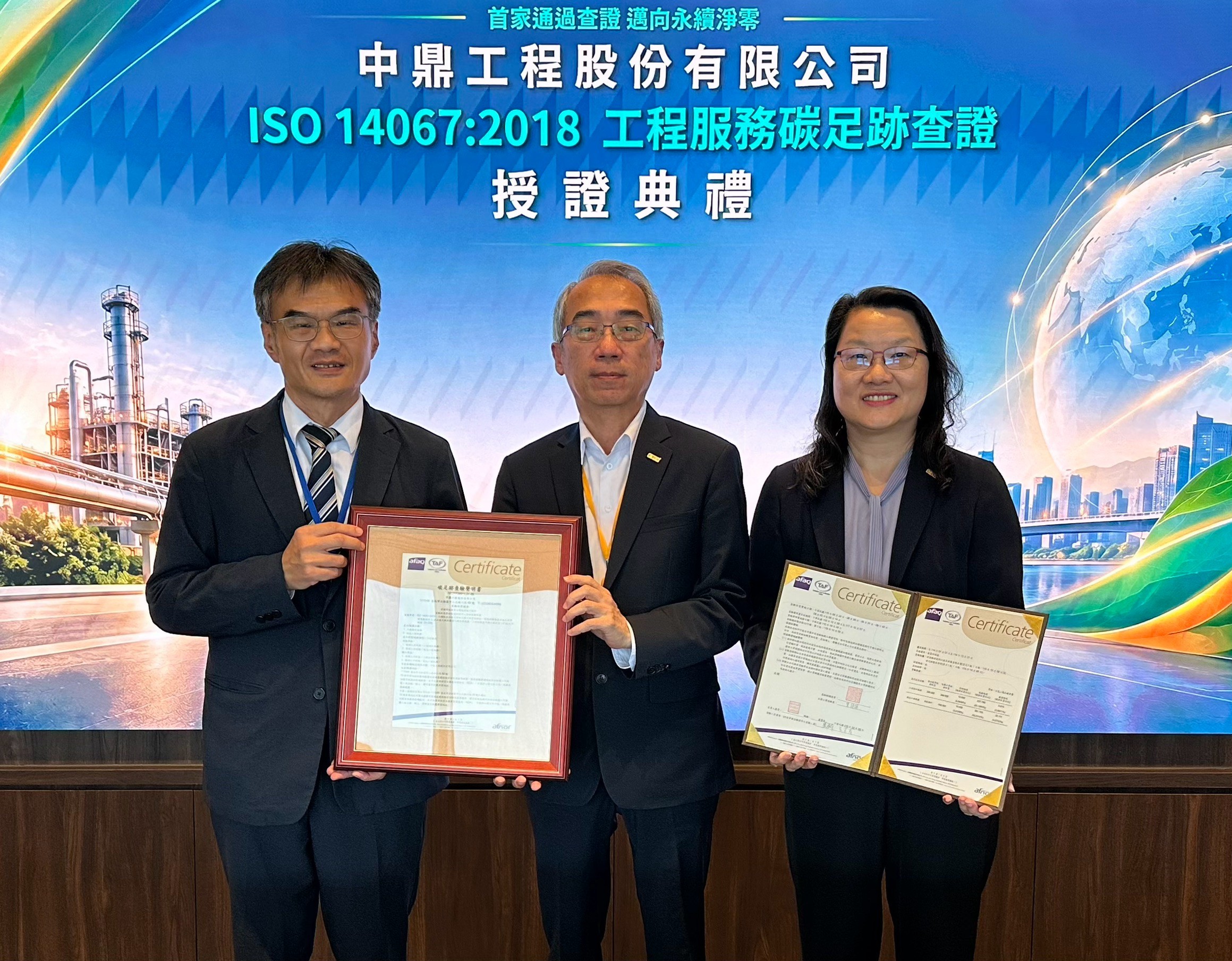
"Fobiao International Certification" Completes ISO 14067 Carbon Footprint Verification for "Zhongding Engineering"

“Fabao International Certification” recently announced that “Zhongding Engineering” has successfully completed ISO 14067:2018 product carbon footprint verification, with the scope of verification covering engineering design services and turnkey engineering services. This verification confirms that the company’s carbon emissions data and management system for its engineering services comply with international standards, making it the first company in Taiwan to complete verification in accordance with the Product Category Rules (PCR) for engineering services. As an internationally recognized third-party verification body, “Fabao International Certification” conducted this verification in accordance with the ISO 14067 standard,and conducted an independent assessment of the carbon footprint scope definition, data collection, calculation methods, and selection of emission factors for “CECC Engineering” services. The verification scope covered life cycle stages ranging from raw material procurement and service delivery to waste disposal. The verification process confirmed that the carbon footprint data possess completeness, consistency, and transparency. “Zhongding” uses “each working hour” as the functional unit to minimize the impact of differences in the scale and nature of various engineering projects on the assessment results, thereby establishing a consistent calculation benchmark. Through systematic inventory assessments, the company has identified carbon emission hotspots in its engineering services, providing a scientific basis for subsequent carbon reduction measures. This verification demonstrates concrete actions taken by the engineering services industry to integrate environmental performance into its management systems. The professional verification team at “Fabao International Certification” noted that the engineering services’ successful product carbon footprint verification signifies that the company has established a quantifiable and verifiable foundation for carbon management. “CEC” has established a management system compliant with international standards, creating an important practical example for the net-zero transition of Taiwan’s engineering industry. “Fabao International Certification” has long provided product carbon footprint verification services, assisting various industries in establishing credible environmental performance data. In the future, it will continue to promote the implementation of low-carbon sustainability goals in the engineering and related industries through professional verification. This year’s conference heard the ISO Secretary-General’s work report and focused on reviewing the implementation of “ISO Strategy 2030,” the digital transformation of standards, commercial policy,the election of governance officials for the 2027–2029 term, and the 2027 financial budget, among other major governance matters, and announced the winners of the 2026 Lawrence E. Archer Leadership Award. Throughout its century-long history, AFNOR has consistently been a key participant and driving force in global standardization governance. During the conference, following a proposal by AFNOR and approval by ISO members, ISO officially released the “Paris Declaration” on addressing climate change in the global standards sector, calling on member countries to leverage international standards to strengthen climate adaptation capacity and development resilience, and to advance the implementation of the global Sustainable Development Goals.

Read more "
Back to top