

Logo_100yearsAfnor_CMYK_White

Sustainability Reports for SMEs: How to Create a Reliable and Verifiable One

Facebook
Email
Twitter
LinkedIn
Agri-food expertise

Requests for information on sustainability are becoming increasingly common. Customers, banks, investors, and stakeholders are asking companies for reliable, comparable, and transparent data on their environmental, social, and governance performance.

For SMEs, this scenario presents a new challenge, but also an opportunity: to clearly and systematically communicate their commitment to sustainability, leveraging the data, processes, and initiatives already in place within the organization.

The Role of the VSME for SMEs

The VSME—Voluntary Sustainability Reporting Standard for non-listed SMEs —is the European voluntary standard developed by EFRAG for unlisted micro, small, and medium-sized enterprises. Its goal is to provide a simple and proportionate method for disclosing ESG information—that is, environmental, social, and governance information.

Through the VSME, SMEs can begin to structure their sustainability reports without adopting overly complex approaches, thereby responding more effectively to demands from the market, the value chain, and the financial sector.

Why Independent Verification Is Important

A sustainability report is even more effective when the published information undergoes independent verification. Such verification helps demonstrate the reliability and transparency of the reported ESG data, strengthens the trust of customers, banks, investors, and business partners, and improves the quality of internal data collection and management processes.

The independent AFNOR audit evaluates the information contained in the organization’s sustainability report, verifying its accuracy, consistency, completeness, and traceability.

It is therefore not just a matter of verifying the published data, but also of assessing the robustness of the processes the organization uses to collect, monitor, and consolidate ESG information.

ESG Management Systems and Data

During the webinar, we will also explore the connection between sustainability and corporate management systems.

Organizations that adopt management systems such as ISO 9001, ISO 14001, ISO 45001, ISO 50001, ISO 37001, or other certification schemes often already have processes, responsibilities, records, and metrics in place that are useful for collecting and monitoring ESG data.

Management systems can therefore serve as a solid foundation for developing a more robust, structured, and verifiable sustainability report.

What We'll Cover in the Webinar

During the meeting, the following topics will be discussed in depth:

  • because SMEs are increasingly involved in sustainability initiatives;
  • What is ESG data, and why is it important to customers, banks, and stakeholders?;
  • What is VSME, and how can it support proportionate reporting?;
  • How does the AFNOR independent audit work?;
  • What benefits can an audited report offer?;
  • The role of management systems in collecting and monitoring ESG information.

Who is this for?

This webinar is intended for organizations, auditors, and consultants, particularly those working in the areas of quality, the environment, health and safety, energy, compliance, sustainability, corporate social responsibility, and management systems.

I want to watch the webinar recording

Protecting and respecting privacy

The processing of personal data is necessary for the examination of your request, made in your capacity as a professional, to AFNOR Group. Where applicable, this data may also be used to send you commercial information.

In accordance with current European regulations, you have rights of access, rectification, erasure, withdrawal of consent, limitation of processing, opposition to processing and portability concerning your data.

These rights may be exercised by sending a message to the AFNOR DPO.

French speakers: Click here.

English speakers: Click here.

Detailed information on the use of your data and the exercise of your rights can be found in the AFNOR Group's charter on the protection of personal data and privacy.

Click here to find out more.

=

For more information: italy@afnor.org

Tel.: 039 963 9602
AFNOR Italia – Via Artigianelli, 4 – 20900 Monza – Italy

Reliable ESG data, VSME standards, and independent AFNOR verification to meet the needs of customers, banks, and stakeholders.

latest news
from the international network

Agri-food expertise
Taiwan

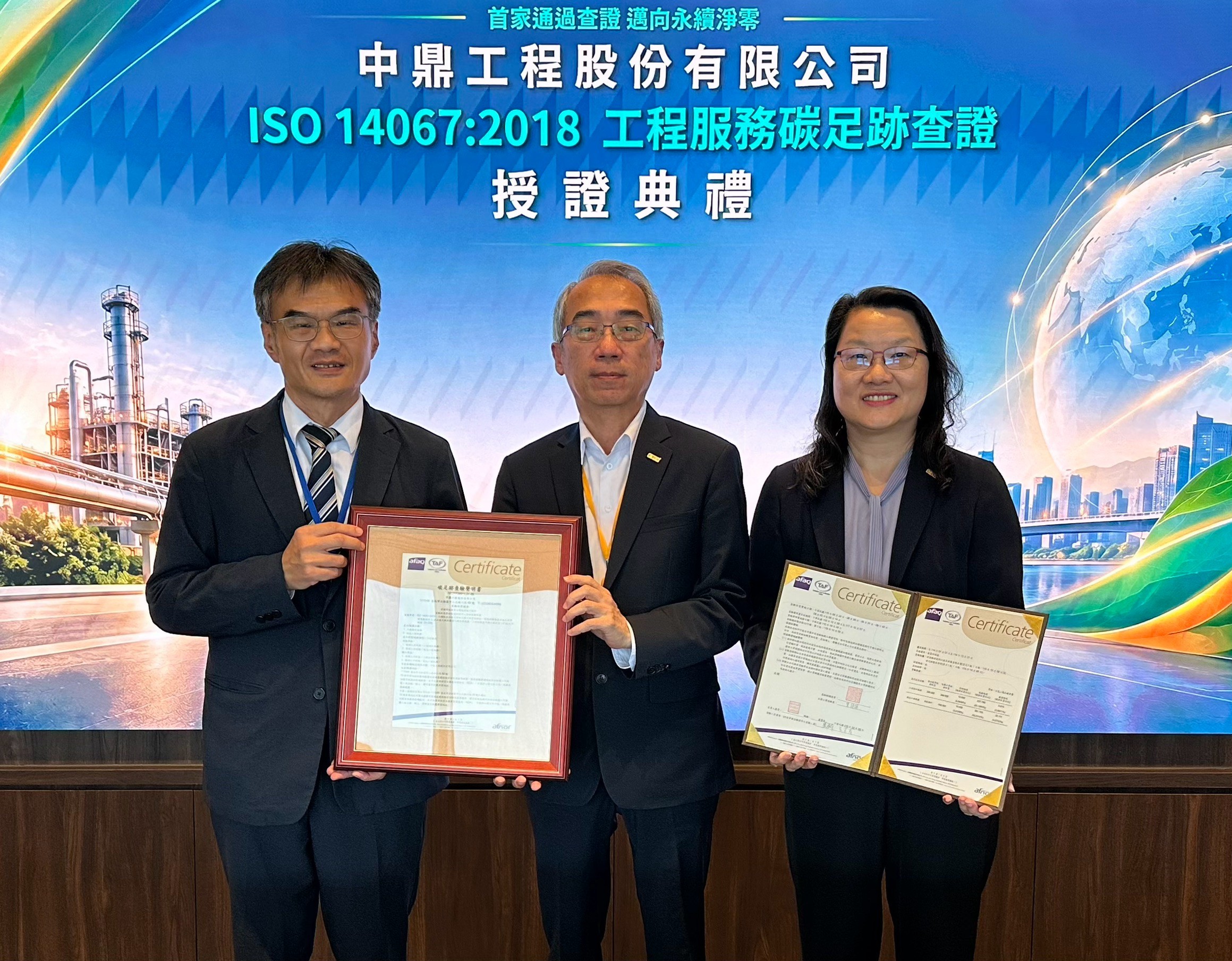
"Fobiao International Certification" Completes ISO 14067 Carbon Footprint Verification for "Zhongding Engineering"

“Fabao International Certification” recently announced that “Zhongding Engineering” has successfully completed ISO 14067:2018 product carbon footprint verification, with the scope of verification covering engineering design services and turnkey engineering services. This verification confirms that the company’s carbon emissions data and management system for its engineering services comply with international standards, making it the first company in Taiwan to complete verification in accordance with the Product Category Rules (PCR) for engineering services. As an internationally recognized third-party verification body, “Fabao International Certification” conducted this verification in accordance with the ISO 14067 standard,and conducted an independent assessment of the carbon footprint scope definition, data collection, calculation methods, and selection of emission factors for “CECC Engineering” services. The verification scope covered life cycle stages ranging from raw material procurement and service delivery to waste disposal. The verification process confirmed that the carbon footprint data possess completeness, consistency, and transparency. “Zhongding” uses “each working hour” as the functional unit to minimize the impact of differences in the scale and nature of various engineering projects on the assessment results, thereby establishing a consistent calculation benchmark. Through systematic inventory assessments, the company has identified carbon emission hotspots in its engineering services, providing a scientific basis for subsequent carbon reduction measures. This verification demonstrates concrete actions taken by the engineering services industry to integrate environmental performance into its management systems. The professional verification team at “Fabao International Certification” noted that the engineering services’ successful product carbon footprint verification signifies that the company has established a quantifiable and verifiable foundation for carbon management. “CEC” has established a management system compliant with international standards, creating an important practical example for the net-zero transition of Taiwan’s engineering industry. “Fabao International Certification” has long provided product carbon footprint verification services, assisting various industries in establishing credible environmental performance data. In the future, it will continue to promote the implementation of low-carbon sustainability goals in the engineering and related industries through professional verification. This year’s conference heard the ISO Secretary-General’s work report and focused on reviewing the implementation of “ISO Strategy 2030,” the digital transformation of standards, commercial policy,the election of governance officials for the 2027–2029 term, and the 2027 financial budget, among other major governance matters, and announced the winners of the 2026 Lawrence E. Archer Leadership Award. Throughout its century-long history, AFNOR has consistently been a key participant and driving force in global standardization governance. During the conference, following a proposal by AFNOR and approval by ISO members, ISO officially released the “Paris Declaration” on addressing climate change in the global standards sector, calling on member countries to leverage international standards to strengthen climate adaptation capacity and development resilience, and to advance the implementation of the global Sustainable Development Goals.

Read more "
Back to top