
Logo_100yearsAfnor_CMYK_White

UNI/PdR 186: Future Parts 5 and 6 Open for Public Comment

Facebook
Email
Twitter
LinkedIn
Agri-food expertise

The development of UNI/PdR 186 continues; this reference standard was created to support the implementation of Legislative Decree 103/2024 on the simplification of administrative controls over economic activities.

UNI has, in fact, launched a public consultation on the future Parts 5 and 6, and is accepting comments and contributions through September 3, 2026. The new sections, promoted by the Ministry of Enterprise and Made in Italy, expand upon the framework already outlined in the first four parts of the guidelines, published in December 2025.

An expansion of the scope of UNI/PdR 186

Sections 5 and 6 introduce additional criteria for identifying and assessing the conditions under which an economic activity may be classified as having a “low” level of risk, for the purposes of the issuance of the certification report by accredited certification bodies.

The system established by Legislative Decree No. 103/2024 aims, in fact, to make administrative controls more proportionate and effective through an assessment based on objective and verifiable criteria.

UNI/PdR 186-5: Public Safety

The upcoming UNI/PdR 186-5 standard will focus on public safety.

The document will identify organizational requirements, measures, and procedures designed to prevent situations that could compromise:

  • collective safety;
  • public order;
  • community safety.

The goal is to provide organizations with structured criteria to demonstrate their ability to prevent and manage risks related to public safety.

UNI/PdR 186-6: Protection of Public Safety

The future UNI/PdR 186-6 standard, on the other hand, will be dedicated to safeguarding public trust, with a particular focus on preventing phenomena such as:

  • forgery;
  • counterfeiting;
  • fraud;
  • misuse of documents, certifications, and information of public interest.

This policy aims to promote integrity, authenticity, and traceability in business processes by identifying requirements designed to prevent behaviors or situations that could compromise the reliability of information and documents.

The Role of the Certification Report and Accredited Certification

The certification report is a central component of the system outlined in Article 3 of Legislative Decree No. 103/2024.

Through the Report, organizations can demonstrate that they meet the necessary conditions to be classified as “low” risk. In this context, accredited certification plays a strategic role in supporting the administrative streamlining mandated by the legislature and in ensuring competence, independence, and reliability in the assessment process.

The Public Consultation

Public consultation is a key stage in the process of developing the practice, as it allows businesses, professionals, conformity assessment bodies, public administrations, and interested stakeholders to submit comments and technical input.

Contributions may be submitted through September 3, 2026. The publication of the new sections represents a significant step toward the completion of UNI/PdR 186, with the expectation that the entire standard will be finalized by the end of 2026.

latest news
from the international network

Agri-food expertise
Taiwan

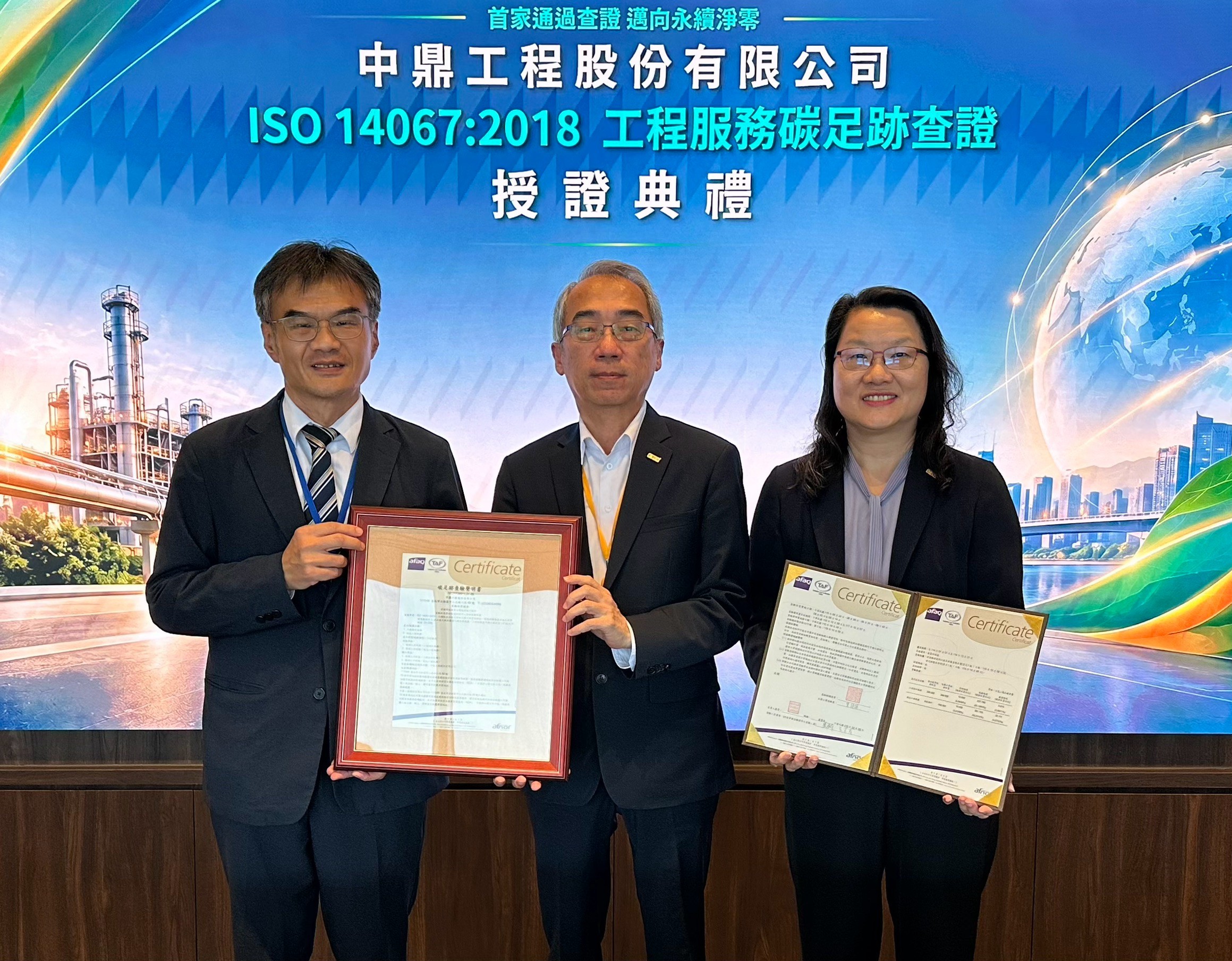
"Fobiao International Certification" Completes ISO 14067 Carbon Footprint Verification for "Zhongding Engineering"

“Fabao International Certification” recently announced that “Zhongding Engineering” has successfully completed ISO 14067:2018 product carbon footprint verification, with the scope of verification covering engineering design services and turnkey engineering services. This verification confirms that the company’s carbon emissions data and management system for its engineering services comply with international standards, making it the first company in Taiwan to complete verification in accordance with the Product Category Rules (PCR) for engineering services. As an internationally recognized third-party verification body, “Fabao International Certification” conducted this verification in accordance with the ISO 14067 standard,and conducted an independent assessment of the carbon footprint scope definition, data collection, calculation methods, and selection of emission factors for “CECC Engineering” services. The verification scope covered life cycle stages ranging from raw material procurement and service delivery to waste disposal. The verification process confirmed that the carbon footprint data possess completeness, consistency, and transparency. “Zhongding” uses “each working hour” as the functional unit to minimize the impact of differences in the scale and nature of various engineering projects on the assessment results, thereby establishing a consistent calculation benchmark. Through systematic inventory assessments, the company has identified carbon emission hotspots in its engineering services, providing a scientific basis for subsequent carbon reduction measures. This verification demonstrates concrete actions taken by the engineering services industry to integrate environmental performance into its management systems. The professional verification team at “Fabao International Certification” noted that the engineering services’ successful product carbon footprint verification signifies that the company has established a quantifiable and verifiable foundation for carbon management. “CEC” has established a management system compliant with international standards, creating an important practical example for the net-zero transition of Taiwan’s engineering industry. “Fabao International Certification” has long provided product carbon footprint verification services, assisting various industries in establishing credible environmental performance data. In the future, it will continue to promote the implementation of low-carbon sustainability goals in the engineering and related industries through professional verification. This year’s conference heard the ISO Secretary-General’s work report and focused on reviewing the implementation of “ISO Strategy 2030,” the digital transformation of standards, commercial policy,the election of governance officials for the 2027–2029 term, and the 2027 financial budget, among other major governance matters, and announced the winners of the 2026 Lawrence E. Archer Leadership Award. Throughout its century-long history, AFNOR has consistently been a key participant and driving force in global standardization governance. During the conference, following a proposal by AFNOR and approval by ISO members, ISO officially released the “Paris Declaration” on addressing climate change in the global standards sector, calling on member countries to leverage international standards to strengthen climate adaptation capacity and development resilience, and to advance the implementation of the global Sustainable Development Goals.

Read more "
Back to top