Logo_100yearsAfnor_CMYK_White
Home > International news > Towards a low-carbon future: environmental standards highlighted in China at the Boao Forum

Towards a low-carbon future: environmental standards take center stage at China's Boao Forum

Facebook
Email
Twitter
LinkedIn
Agri-food expertise

In April 2025, at the recent Boao Forum Conference for Asia, China demonstrated its leadership in green technological innovation, from renewable energies to electric vehicles, while consolidating its crucial role in global decarbonization efforts. Against this evolving backdrop, the global market now requires solid certifications and specialized training to help companies enhance their environmental performance and access new markets.

The stakes of the event

The theme of this year's Boao Forum for Asia annual conference was "Asia in a Changing World: Towards a Common Future", with formerInternational Energy Agency officials pointing out that, despite certain protectionist tendencies, Chinese advances, particularly in batteries, storage systems and electric mobility, offer exceptional opportunities to turn decarbonization into an economic asset. This period of transition is stimulating significant investment and prompting global players to reconsider their supply chains in terms of quality and standards compliance.

Chinese and German perspectives on decarbonization

While China accelerates its green technologies, Germany stands out for its rigorous industrial strategy and energy efficiency. Thanks to strong government support and targeted investment in clean technologies,Germany has reduced its industrial emissions by an average of 25% compared to 2010 levels. This convergence of expertise enables an exchange of best practices: while China is massively deploying innovations, Germany is refining its environmental monitoring methods using internationally recognized standards.

The importance of ISO 14067 and ISO 14064 certification and standards

In this dynamic, certification is becoming a veritable passport to quality for companies wishing to conquer international markets. At AFNOR, we support organizations in adopting standards such as :

  • ISO 14067: This standard assesses thecarbon footprint of products over their entire life cycle, providing crucial transparency to promote sustainable practices.
  • ISO 14064: This standard guides the reporting of greenhouse gas emissions by organizations, providing a strategic lever for optimizing energy costs and strengthening global competitiveness.

These certifications are backed up by in-depth training, guaranteeing advanced technical expertise and adaptability to regulatory and technological developments.

AFNOR International's offer to support sustainable transformation

Thanks to its worldwide expertise, AFNOR offers an integrated service combining :

  • Rigorous environmental certifications: Our reference systems comply with international standards, reducing our environmental footprint and consolidating our companies' credibility.
  • Customized training: Our specialized modules prepare your teams for the challenges of the energy transition, improving their responsiveness to market developments.

This support aims to turn the challenges of decarbonization into tangible business opportunities, facilitating access to international markets and boosting investor confidence through a standardized, certified approach.

The April 2025 event marks a turning point in the global green economy. As China and Germany demonstrate, in their own way, their commitment to decarbonization through substantial investment and ambitious industrial policies, companies are encouraged to seize the opportunities offered by international certifications and specialized training. By adopting standards such asISO 14067 andISO 14064, and drawing on AFNOR's expertise, organizations can turn their environmental practices into a strategic advantage, with quality and innovation as the foundation of their success.

Read more :
latest news
from the international network

Agri-food expertise
Taiwan

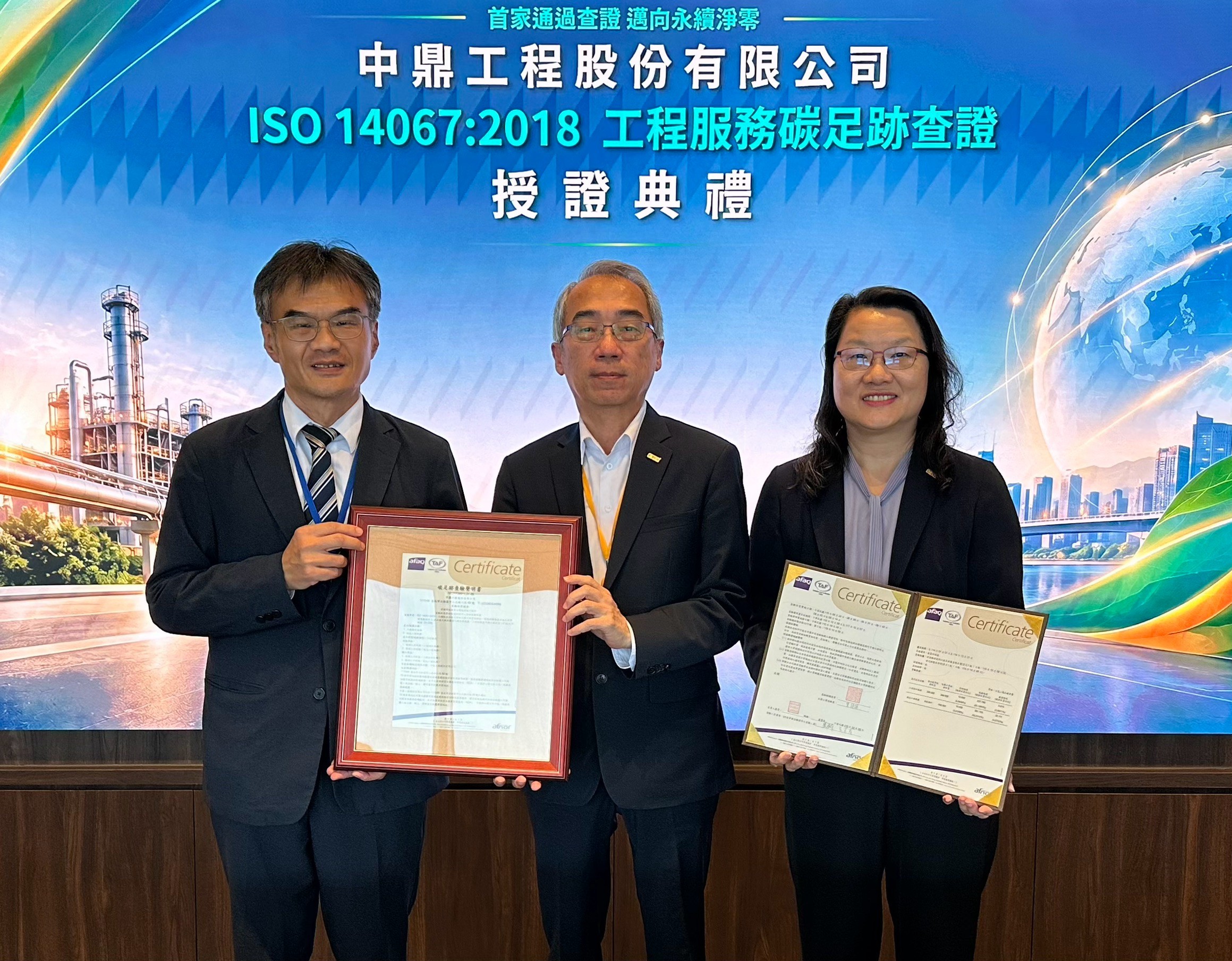
"Fobiao International Certification" Completes ISO 14067 Carbon Footprint Verification for "Zhongding Engineering"

“Fabao International Certification” recently announced that “Zhongding Engineering” has successfully completed ISO 14067:2018 product carbon footprint verification, with the scope of verification covering engineering design services and turnkey engineering services. This verification confirms that the company’s carbon emissions data and management system for its engineering services comply with international standards, making it the first company in Taiwan to complete verification in accordance with the Product Category Rules (PCR) for engineering services. As an internationally recognized third-party verification body, “Fabao International Certification” conducted this verification in accordance with the ISO 14067 standard,and conducted an independent assessment of the carbon footprint scope definition, data collection, calculation methods, and selection of emission factors for “CECC Engineering” services. The verification scope covered life cycle stages ranging from raw material procurement and service delivery to waste disposal. The verification process confirmed that the carbon footprint data possess completeness, consistency, and transparency. “Zhongding” uses “each working hour” as the functional unit to minimize the impact of differences in the scale and nature of various engineering projects on the assessment results, thereby establishing a consistent calculation benchmark. Through systematic inventory assessments, the company has identified carbon emission hotspots in its engineering services, providing a scientific basis for subsequent carbon reduction measures. This verification demonstrates concrete actions taken by the engineering services industry to integrate environmental performance into its management systems. The professional verification team at “Fabao International Certification” noted that the engineering services’ successful product carbon footprint verification signifies that the company has established a quantifiable and verifiable foundation for carbon management. “CEC” has established a management system compliant with international standards, creating an important practical example for the net-zero transition of Taiwan’s engineering industry. “Fabao International Certification” has long provided product carbon footprint verification services, assisting various industries in establishing credible environmental performance data. In the future, it will continue to promote the implementation of low-carbon sustainability goals in the engineering and related industries through professional verification. This year’s conference heard the ISO Secretary-General’s work report and focused on reviewing the implementation of “ISO Strategy 2030,” the digital transformation of standards, commercial policy,the election of governance officials for the 2027–2029 term, and the 2027 financial budget, among other major governance matters, and announced the winners of the 2026 Lawrence E. Archer Leadership Award. Throughout its century-long history, AFNOR has consistently been a key participant and driving force in global standardization governance. During the conference, following a proposal by AFNOR and approval by ISO members, ISO officially released the “Paris Declaration” on addressing climate change in the global standards sector, calling on member countries to leverage international standards to strengthen climate adaptation capacity and development resilience, and to advance the implementation of the global Sustainable Development Goals.

Read more "
Back to top