Logo_100yearsAfnor_CMYK_White
Home > International news > Seizing the opportunity of sustainability: ISO 26000, certification, and training at the heart of a new regulatory environment

Seizing the opportunity of sustainability: ISO 26000, certification and training at the heart of a new regulatory context

Facebook
Email
Twitter
LinkedIn
Agri-food expertise

Regulatory developments in Europe have taken a significant turn with the introduction of the " Stop the clock " mechanism under the CSRD directive. This mechanism provides welcome leeway for companies to deepen their commitments and better anticipate future requirements. However, this delay should not be seen as an opportunity to relax, but rather as the ideal time to reassess and improve their sustainability strategies.

Against this backdrop, ISO 26000 is emerging as an essential strategic tool. Recognized worldwide, it goes beyond a simple reference framework to become the foundation of a solid CSR approach, helping companies to identify key environmental, social and governance issues. By adopting this approach, organizations can add value to their sustainable initiatives, increase transparency and gain a significant competitive edge. Integrating ISO 26000 into their overall strategy thus enables a thoughtful transition to the new sustainability reporting requirements.

AFNOR International is fully committed to this dynamic transformation. Faced with a changing regulatory framework, our certification and training offer is based on the ISO 26000 standard, to support all companies, from large organizations to SMEs, in developing their skills. Our training programs enable teams to fully grasp the challenges of sustainability, identify the levers for action and master the tools required for the day-to-day integration of responsible practices. In addition, ISO 26000-based certification, in particular via the Engagé RSElabel, attests to the quality and rigor of your corporate social responsibility initiatives.

The power of this approach lies in its ability to align regulatory requirements with a voluntary strategy that takes account of the dual materiality of impacts, both internal and external. Whereas the CSRD directive imposes strict standards and verification by an accredited auditor, ISO 26000 offers the flexibility required for a tailor-made approach, adapted to the size and specific features of each company. This complementary approach transforms regulatory constraints into real opportunities for performance and transparency.

Current events underline the fact that the transition to a sustainable economy is underway. By using this period to reinforce your CSR commitments through ISO 26000, you position yourself as a leader in an evolving international market. Our training offer will guide you in exploiting the full potential of this standard, while our certification scheme ensures credible and rewarding recognition of your responsible actions.

Find out more about our offers and support your transformation, download ourour white paper or contact our experts for personalized support. Together, let's make sustainability a real competitive strength and a pillar of your long-term corporate strategy.

Read more :
latest news
from the international network

Agri-food expertise
Taiwan

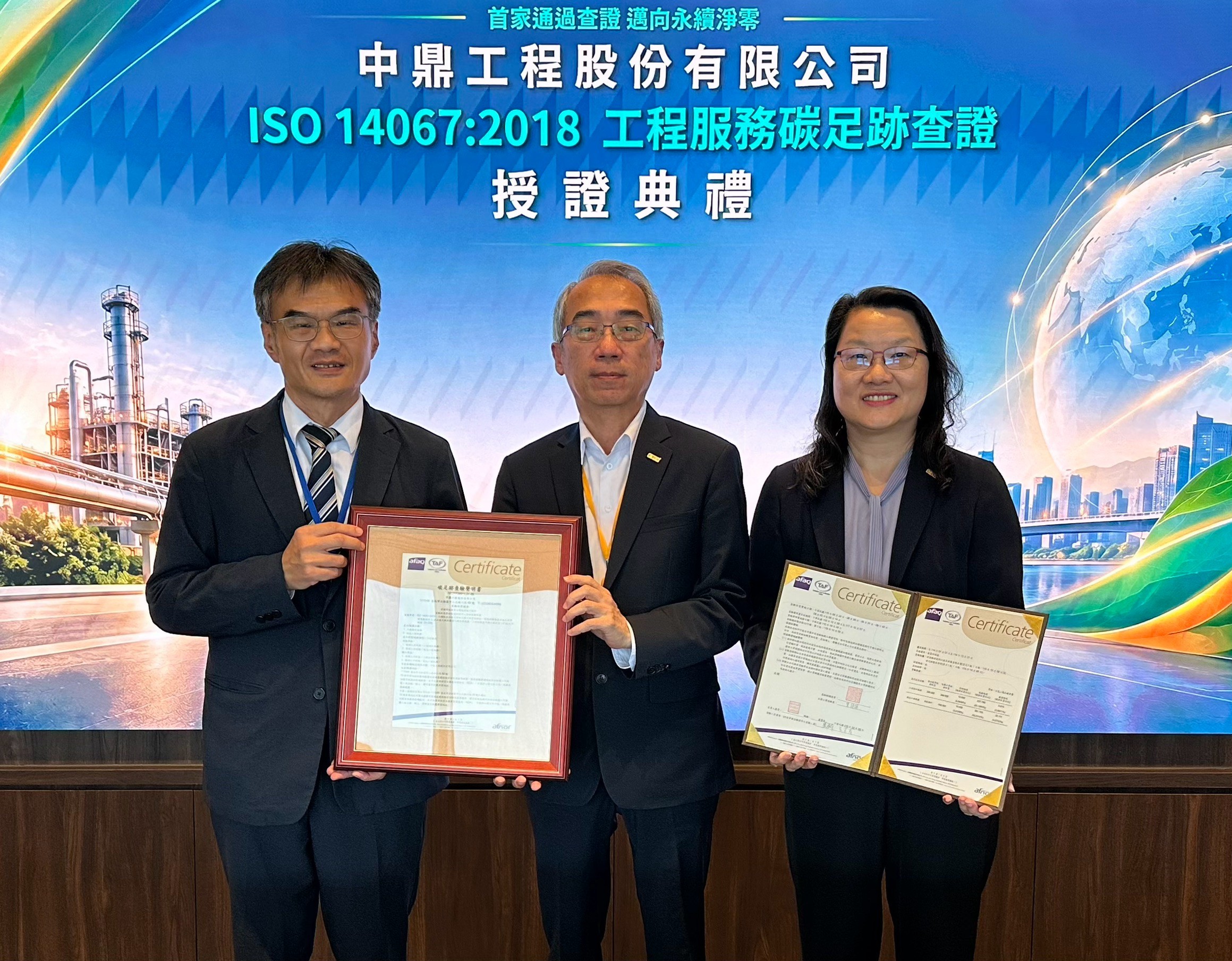
"Fobiao International Certification" Completes ISO 14067 Carbon Footprint Verification for "Zhongding Engineering"

“Fabao International Certification” recently announced that “Zhongding Engineering” has successfully completed ISO 14067:2018 product carbon footprint verification, with the scope of verification covering engineering design services and turnkey engineering services. This verification confirms that the company’s carbon emissions data and management system for its engineering services comply with international standards, making it the first company in Taiwan to complete verification in accordance with the Product Category Rules (PCR) for engineering services. As an internationally recognized third-party verification body, “Fabao International Certification” conducted this verification in accordance with the ISO 14067 standard,and conducted an independent assessment of the carbon footprint scope definition, data collection, calculation methods, and selection of emission factors for “CECC Engineering” services. The verification scope covered life cycle stages ranging from raw material procurement and service delivery to waste disposal. The verification process confirmed that the carbon footprint data possess completeness, consistency, and transparency. “Zhongding” uses “each working hour” as the functional unit to minimize the impact of differences in the scale and nature of various engineering projects on the assessment results, thereby establishing a consistent calculation benchmark. Through systematic inventory assessments, the company has identified carbon emission hotspots in its engineering services, providing a scientific basis for subsequent carbon reduction measures. This verification demonstrates concrete actions taken by the engineering services industry to integrate environmental performance into its management systems. The professional verification team at “Fabao International Certification” noted that the engineering services’ successful product carbon footprint verification signifies that the company has established a quantifiable and verifiable foundation for carbon management. “CEC” has established a management system compliant with international standards, creating an important practical example for the net-zero transition of Taiwan’s engineering industry. “Fabao International Certification” has long provided product carbon footprint verification services, assisting various industries in establishing credible environmental performance data. In the future, it will continue to promote the implementation of low-carbon sustainability goals in the engineering and related industries through professional verification. This year’s conference heard the ISO Secretary-General’s work report and focused on reviewing the implementation of “ISO Strategy 2030,” the digital transformation of standards, commercial policy,the election of governance officials for the 2027–2029 term, and the 2027 financial budget, among other major governance matters, and announced the winners of the 2026 Lawrence E. Archer Leadership Award. Throughout its century-long history, AFNOR has consistently been a key participant and driving force in global standardization governance. During the conference, following a proposal by AFNOR and approval by ISO members, ISO officially released the “Paris Declaration” on addressing climate change in the global standards sector, calling on member countries to leverage international standards to strengthen climate adaptation capacity and development resilience, and to advance the implementation of the global Sustainable Development Goals.

Read more "
Back to top