

Logo_100yearsAfnor_CMYK_White
Home > International News > ISO 9001 and ISO 14001:2026 marks a turning point. How can organizations prepare now?

ISO 9001 and ISO 14001:2026 mark a turning point. How can organizations start preparing now?

Facebook
Email
Twitter
LinkedIn
Agri-food expertise

2026 is shaping up to be a pivotal year for organizations certified to ISO 9001 and ISO 14001. The two most widely used standards in the world for quality management and environmental management are entering a new phase of revision. For companies, local governments, and associations that are already certified, the challenge is clear: to understand the upcoming changes in order to anticipate the transition and approach future audits with confidence.

Why a revision now?
ISO standards are regularly updated to keep pace with economic, technological, and societal challenges. Since the last version was published in 2015, stakeholder expectations have evolved: the growing importance of social responsibility, increased requirements for environmental performance, the digitization of processes, organizational resilience…
The current revision aims to incorporate these changes while strengthening consistency among the various management standards.

What changes can we expect?
Although the final texts have not yet been published, several trends are already emerging in international working groups:

  • A stronger focus on risks and opportunities, with greater emphasis on organizational resilience.
  • Greater integration of environmental and societal issues, in line with the expectations of markets and regulators.
  • Clarification of certain requirements to make it easier for organizations of all sizes to adopt them.
  • A more explicit focus on digital transformation, particularly in terms of process and data management.

These changes will have a direct impact on existing management systems, and therefore on transition audits.

Why start preparing now?
Waiting for the official release of the new versions would be a strategic mistake. Organizations that start preparing now will benefit from:

  • a smoother transition, without time pressure;
  • greater internal buy-in, achieved through a step-by-step approach to process improvement;
  • a clearer understanding of the impacts, facilitating budget and operational planning;
  • closer communication with auditors to ensure that key milestones are met.

First event: the webinar on May 21
To help organizations better understand the situation, AFNOR International is organizing a free webinar on May 21 at 10 a.m. (Paris time) in English, dedicated to the changes in the ISO 9001 and ISO 14001 standards.
Our specialized auditors will answer participants’ questions live and share key insights to help prepare for the transition.

👉 Free registration:
https://afnor.zoom.us/webinar/register/WN_r8mQt9DVT4GcnC2vk79YfA#/registration

Read more
latest news
from the international network

Agri-food expertise
Taiwan

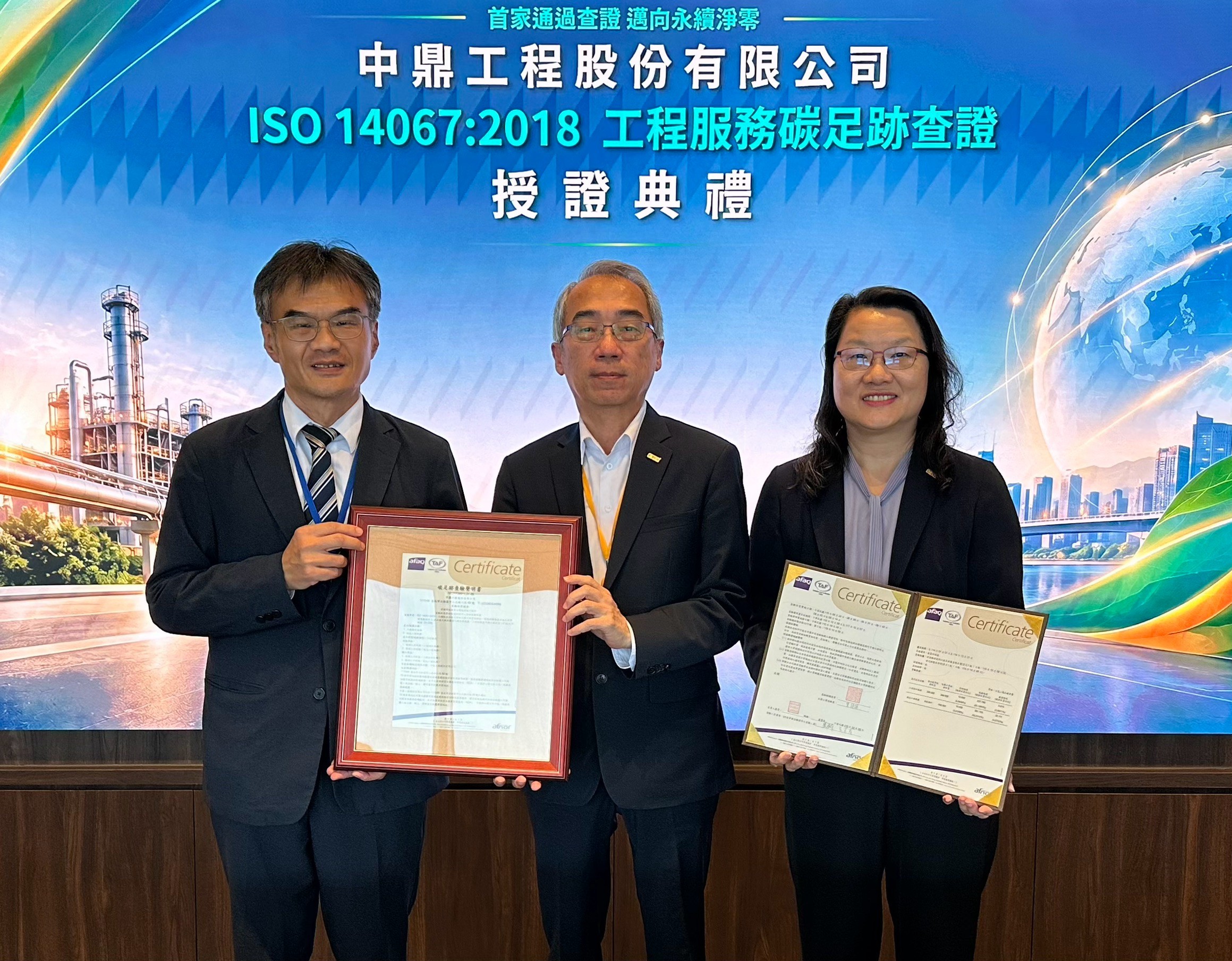
"Fobiao International Certification" Completes ISO 14067 Carbon Footprint Verification for "Zhongding Engineering"

“Fabao International Certification” recently announced that “Zhongding Engineering” has successfully completed ISO 14067:2018 product carbon footprint verification, with the scope of verification covering engineering design services and turnkey engineering services. This verification confirms that the company’s carbon emissions data and management system for its engineering services comply with international standards, making it the first company in Taiwan to complete verification in accordance with the Product Category Rules (PCR) for engineering services. As an internationally recognized third-party verification body, “Fabao International Certification” conducted this verification in accordance with the ISO 14067 standard,and conducted an independent assessment of the carbon footprint scope definition, data collection, calculation methods, and selection of emission factors for “CECC Engineering” services. The verification scope covered life cycle stages ranging from raw material procurement and service delivery to waste disposal. The verification process confirmed that the carbon footprint data possess completeness, consistency, and transparency. “Zhongding” uses “each working hour” as the functional unit to minimize the impact of differences in the scale and nature of various engineering projects on the assessment results, thereby establishing a consistent calculation benchmark. Through systematic inventory assessments, the company has identified carbon emission hotspots in its engineering services, providing a scientific basis for subsequent carbon reduction measures. This verification demonstrates concrete actions taken by the engineering services industry to integrate environmental performance into its management systems. The professional verification team at “Fabao International Certification” noted that the engineering services’ successful product carbon footprint verification signifies that the company has established a quantifiable and verifiable foundation for carbon management. “CEC” has established a management system compliant with international standards, creating an important practical example for the net-zero transition of Taiwan’s engineering industry. “Fabao International Certification” has long provided product carbon footprint verification services, assisting various industries in establishing credible environmental performance data. In the future, it will continue to promote the implementation of low-carbon sustainability goals in the engineering and related industries through professional verification. This year’s conference heard the ISO Secretary-General’s work report and focused on reviewing the implementation of “ISO Strategy 2030,” the digital transformation of standards, commercial policy,the election of governance officials for the 2027–2029 term, and the 2027 financial budget, among other major governance matters, and announced the winners of the 2026 Lawrence E. Archer Leadership Award. Throughout its century-long history, AFNOR has consistently been a key participant and driving force in global standardization governance. During the conference, following a proposal by AFNOR and approval by ISO members, ISO officially released the “Paris Declaration” on addressing climate change in the global standards sector, calling on member countries to leverage international standards to strengthen climate adaptation capacity and development resilience, and to advance the implementation of the global Sustainable Development Goals.

Read more "
Back to top