

Logo_100yearsAfnor_CMYK_White

60 years of Franco-Chinese friendship and over 20 years with AFNOR

Facebook
Email
Twitter
LinkedIn
Agri-food expertise

In 2024, France and China celebrated 60 years of diplomatic friendship, forging economic, cultural and political ties that have withstood the test of time and changes on the international scene. The AFNOR Group has been present throughout the country for over 20 years, thanks to its subsidiary AFNOR China.

One of the pillars of Franco-Chinese friendship is undoubtedly the economic partnership. Today, China is France's second-largest trading partner outside the European Union, while France is one of China's main European partners. Trade between the two countries covers a wide range of sectors, from aeronautics and agri-food to luxury goods and renewable energies. The two countries have also collaborated on major infrastructure projects, such as the construction of nuclear power plants and high-speed rail lines.

It is in this context that Myriam AUGEREAU-LANDAIS, Managing Director of AFNOR International, was honored to take over the presidency of its subsidiary AFNOR China at the end of May 2024. The AFNOR group has been present in China since 2001, with 3 offices in strategic regions and over a hundred employees. The head office is located in Chengdu, in Sichuan province, and the group has two branches in Guangzhou and Shanghai to provide certification and training services throughout China.

20240531 03
Chengdu office visit_May 31, 2024
20240603 06
Shanghai office visit_3 June 2024

AFNOR China is a CNCA-accredited certification body, and is therefore authorized to issue certificates accredited by IATF, IRIS, IECQ, COFRAC ("Accréditation n°4-0001 et 4-0571, Certification de système de management, scopes available on www.cofrac.fr") and TAF ("Accréditations n°MS012 Certification de Systèmes de management ; n°VB004 Vérification ; scopes available on https://www.taftw.org.tw/en/searchDirectory/?q=AFNOR ").

3
Meeting with CNCA, Myriam AUGEREAU-LANDAIS and Mr. Yao LEI, Deputy Director, Department Head of CNCA, State Administration for Market Supervision and Administration (SAMSA)

This short trip to China testified to the enduring friendship between France and China, and rekindled confidence and ambition to develop AFNOR's business in China with greater prosperity. Looking to the future, France and China seem determined to continue their collaboration, adapting to new geopolitical realities and exploring new areas of cooperation, such as artificial intelligence, public health and cybersecurity.

Read more

latest news
from the international network

Agri-food expertise
Taiwan

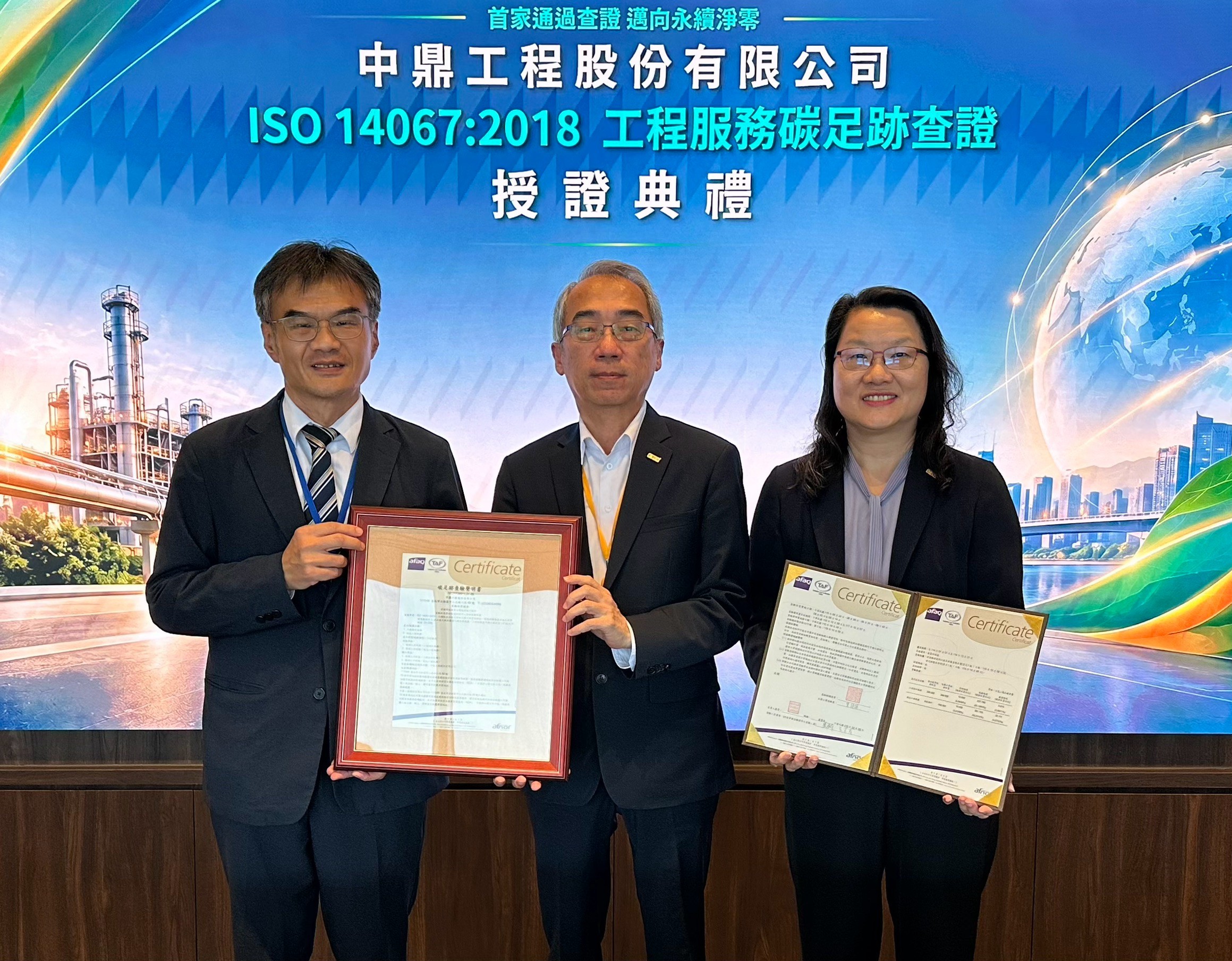
"Fobiao International Certification" Completes ISO 14067 Carbon Footprint Verification for "Zhongding Engineering"

“Fabao International Certification” recently announced that “Zhongding Engineering” has successfully completed ISO 14067:2018 product carbon footprint verification, with the scope of verification covering engineering design services and turnkey engineering services. This verification confirms that the company’s carbon emissions data and management system for its engineering services comply with international standards, making it the first company in Taiwan to complete verification in accordance with the Product Category Rules (PCR) for engineering services. As an internationally recognized third-party verification body, “Fabao International Certification” conducted this verification in accordance with the ISO 14067 standard,and conducted an independent assessment of the carbon footprint scope definition, data collection, calculation methods, and selection of emission factors for “CECC Engineering” services. The verification scope covered life cycle stages ranging from raw material procurement and service delivery to waste disposal. The verification process confirmed that the carbon footprint data possess completeness, consistency, and transparency. “Zhongding” uses “each working hour” as the functional unit to minimize the impact of differences in the scale and nature of various engineering projects on the assessment results, thereby establishing a consistent calculation benchmark. Through systematic inventory assessments, the company has identified carbon emission hotspots in its engineering services, providing a scientific basis for subsequent carbon reduction measures. This verification demonstrates concrete actions taken by the engineering services industry to integrate environmental performance into its management systems. The professional verification team at “Fabao International Certification” noted that the engineering services’ successful product carbon footprint verification signifies that the company has established a quantifiable and verifiable foundation for carbon management. “CEC” has established a management system compliant with international standards, creating an important practical example for the net-zero transition of Taiwan’s engineering industry. “Fabao International Certification” has long provided product carbon footprint verification services, assisting various industries in establishing credible environmental performance data. In the future, it will continue to promote the implementation of low-carbon sustainability goals in the engineering and related industries through professional verification. This year’s conference heard the ISO Secretary-General’s work report and focused on reviewing the implementation of “ISO Strategy 2030,” the digital transformation of standards, commercial policy,the election of governance officials for the 2027–2029 term, and the 2027 financial budget, among other major governance matters, and announced the winners of the 2026 Lawrence E. Archer Leadership Award. Throughout its century-long history, AFNOR has consistently been a key participant and driving force in global standardization governance. During the conference, following a proposal by AFNOR and approval by ISO members, ISO officially released the “Paris Declaration” on addressing climate change in the global standards sector, calling on member countries to leverage international standards to strengthen climate adaptation capacity and development resilience, and to advance the implementation of the global Sustainable Development Goals.

Read more "
Back to top