

Certificazione UNI/PdR 125: integrare la parità di genere nei processi aziendali

Facebook
Email
Twitter
LinkedIn
Agri-food expertise

Afnor Italia organizza un seminario gratuito online sulla UNI/PdR 125:2022, dedicato all'integrazione della parità di genere nei processi aziendali. L'evento si terrà martedì 2 dicembre 2025, dalle 10:00 alle 12:00, e sarà rivolto a HR Manager, Sustainability Officer, consulenti e direzioni aziendali. Un'occasione per approfondire la norma, analizzare casi pratici e confrontarsi con esperti del settore.

Certificazione UNI/PdR 125: integrare la parità di genere nei processi aziendali

Martedì 2 dicembre 2025 | Ore 10:00 - 12:30 | Online

Afnor Italia organizza un seminario gratuito dedicato alla UNI/PdR 125:2022, la prassi di riferimento per la certificazione della parità di genere nei luoghi di lavoro. L'incontro è rivolto a HR Manager, Sustainability Officer, Consulenti e Direzioni aziendali interessati ad approfondire gli strumenti operativi e strategici per promuovere una cultura inclusiva e sostenibile.

Durante il seminario verranno presentati:

  • i requisiti della UNI/PdR 125 e il suo impatto sui processi aziendali;
  • casi pratici di implementazione;
  • aggiornamenti normativi e opportunità di finanziamento;
  • il ruolo dei KPI e dei sistemi di gestione nella promozione della parità.

Un'occasione di confronto con esperti del settore e aziende già certificate, per comprendere come trasformare la parità di genere in un valore concreto e misurabile.

👉 Iscriviti gratuitamente a questo link

latest news
from the international network

Agri-food expertise
Taiwan

Taiyo Technology has obtained AS9100 and ISO 27001 management system certifications through international standard certification.

"FAB International Certification" recently announced that Taiyo Technology Co., Ltd. has successfully passed the international certification for the AS9100:2016 aerospace quality management system and the ISO/IEC 27001:2022 information security management system. These two certifications confirm that the company's management systems meet international standards in the fields of aerospace quality control and information security protection. "FAB International Certification" recently announced that "Taiyo Technology Co., Ltd." has successfully passed the international certification of AS9100:2016 Aerospace Quality Management System and ISO/IEC 27001:2022 Information Security Management System. These two certifications confirm that the company's management systems in the fields of aerospace quality control and information security protection meet international standard requirements. As a third-party certification body, "FAB International Certification" conducted a comprehensive assessment of Taiyo Technology's quality management processes, product reliability control, information asset protection, and risk management mechanisms based on the AS9100 and ISO/IEC 27001 standards. The certification results show that the company has established a complete and effective integrated management system, demonstrating its commitment to quality and information security in the high-end manufacturing field. Taiyo Technology is a professional copper foil substrate manufacturer whose products are used in communications, servers, automotive electronics, and other fields. Building on its existing multiple management systems, the company's successful AS9100 and ISO 27001 certification demonstrates its continuous pursuit of excellence and strengthens its professional capabilities as a qualified supplier in the aerospace and defense supply chain. FAB International Certification pointed out that the company's simultaneous AS9100 and ISO 27001 certification demonstrates that its management system can meet the aerospace industry's stringent quality requirements and its high emphasis on supply chain information security. Taiyo Technology's establishment of an international standard management system showcases the competitiveness of Taiwan's manufacturing industry in the high-end market. "FAB International Certification" has long provided certification services in professional fields such as aerospace and information security, assisting enterprises in aligning with international industry standards. In the future, it will continue to promote the upgrading of Taiwan's industry and its integration into the international market through rigorous certification procedures.  

Read more "
Taiwan

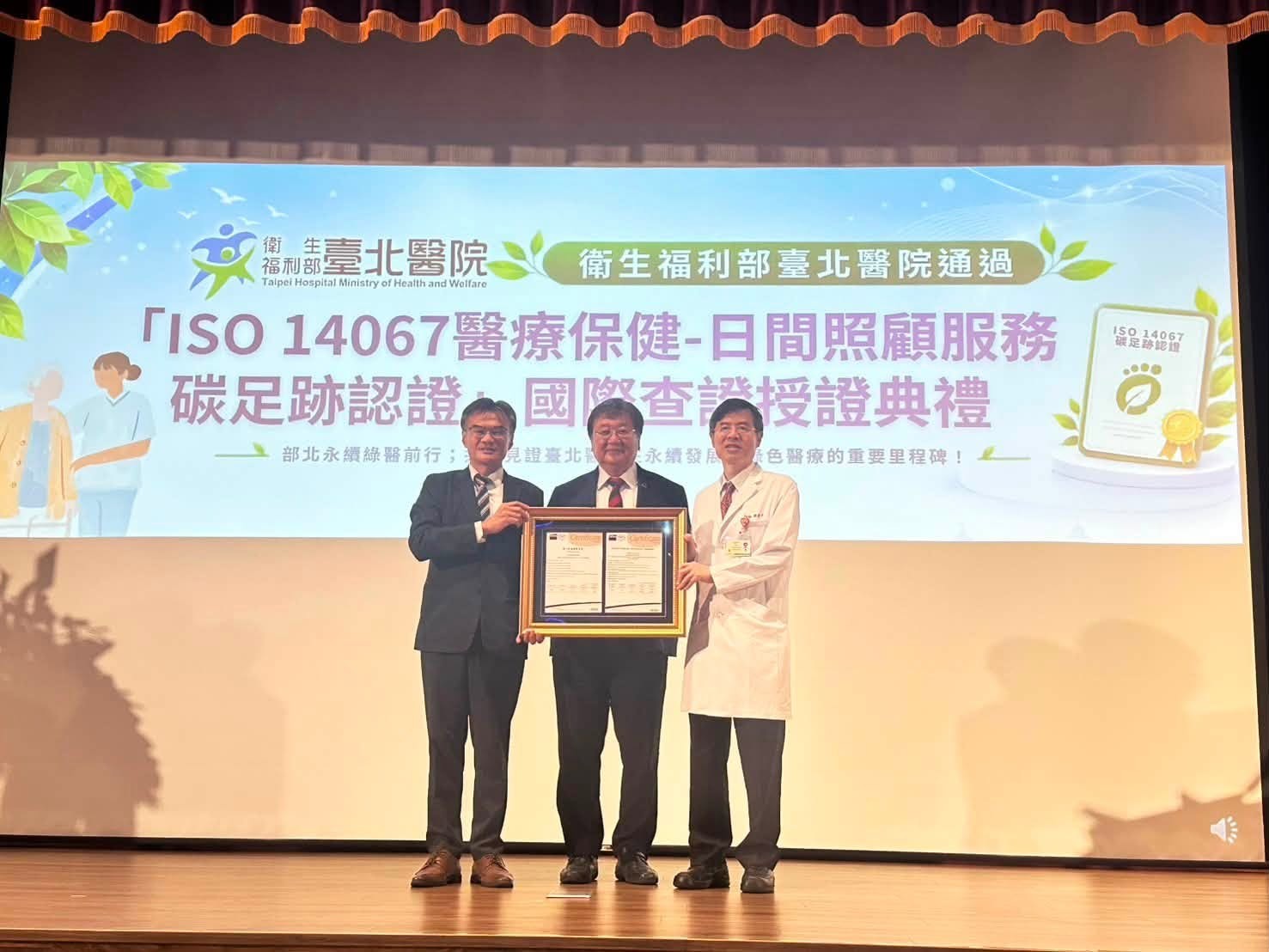
Taiwan Railways Administration obtains carbon footprint label for passenger transport through international certification, marking a new milestone in green transportation

Driven by the goal of net-zero carbon emissions, Taiwan Railway Administration actively promotes carbon footprint assessment and information disclosure as an important step in sustainable transformation. After review and approval by the Ministry of the Environment, TRA officially obtained the right to use the passenger transport service carbon footprint label, becoming the first traditional railway transport service provider in Taiwan to obtain the carbon footprint label and setting a benchmark for green transport services in Taiwan. The Taiwan Railway Administration (TRA), formerly known as the Taiwan Railway Bureau under the Ministry of Transportation, was established in 1887 and has a history of more than 137 years. On January 1, 2024, it was restructured into the Taiwan Railway Administration.TRC shoulders the core mission of passenger and freight transportation for the entire Taiwan railway system, covering vehicle operation, infrastructure maintenance, station management, and customer service. It also cooperates with the government in continuously promoting railway modernization projects, making it a crucial transportation infrastructure in Taiwan. Faced with the global trend of net-zero emissions by 2050, the entire social environment and industrial development are undergoing structural changes. Driven by net-zero carbon emissions, Taiwan Railways is actively promoting carbon footprint assessment and information disclosure as an important step in sustainable transformation.Through the promotion of the "2025-2026 Carbon Footprint Assessment and Carbon Reduction Plan for Stations and Passenger Transport Vehicles," and with the completion of carbon footprint verification for the "Tze-Chiang," "Chu-Kuang," and"Local/Local Express" train types. After review and approval by the Ministry of the Environment, Taiwan Railways officially obtained the right to use the passenger transport service carbon footprint label, becoming the first traditional railway transport service operator in Taiwan to obtain the carbon footprint label and setting a benchmark for green transport services in Taiwan. At the carbon footprint label disclosure ceremony, the head of operations for the Asia-Pacific region of Bureau Veritas,During this process, AFNOR Certification followed international standards to conduct carbon footprint audits and data verification for TRA's Tze-Chiang, Ju-Guang, and local/express passenger transport services to ensure data accuracy and compliance. According to the audit results,the Tze-Chiang Express generates 36 grams of carbon dioxide equivalent (CO2e) per passenger-kilometer, the Chu-Kuang Express generates 50 grams of CO2e, and the Local/Local Express trains generate 55 grams of CO2e. Taiwan Railways Administration stated that it will continue to promote system-wide carbon management based on this verification data and combine it with measures such as vehicle replacement, energy efficiency improvements, and smart railways to move towards the goal of net-zero carbon emissions by 2050.The successful collaboration between Taiwan Railway and FSC not only demonstrates Taiwan Railway's firm commitment to sustainable operations, but also highlights FSC's professional capabilities in the field of carbon management verification. Both parties will continue to work together to realize the vision of a low-carbon society and sustainable development in Taiwan.

Read more "
Italy

The "low" risk: what changes for businesses

The simplification of controls on economic activities enters a new phase. With Legislative Decree No. 103 of July 12, 2024, the legislator introduced a system for identifying and assessing the "low" risk level, aimed at

Read more "
Back to top